日本とインドは、インドの独立以来、友好関係と信頼関係を築いてきました。現在、両国間における最大のプロジェクトは、アーメダバードからムンバイ間のインド新幹線の建築です。日本がインド向けに改良したE3系L67新幹線の試運転の成功と、その技術的特徴、インドでの建設状況、そしてプロジェクトがもたらす経済的・社会的な影響について解説したいと思います。
Japan and India have built a friendly and trustworthy relationship since India’s independence. Currently, the largest project between the two countries is the construction of the Indian high-speed railway between Ahmedabad and Mumbai. I would like to explain the successful test run of the E3 Series L67 Shinkansen, which Japan has improved for India, its technical features, the construction status in India, and the economic and social impact of the project.
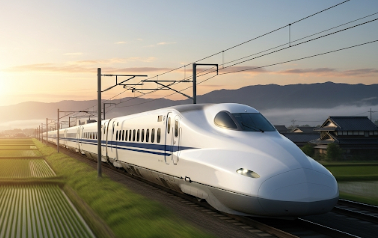
インド新幹線の特徴と技術革新/Features and Innovations of the Indian Shinkansen
耐熱・耐候性: インドの気候に合わせて車体塗装が白色に変更され、これにより太陽熱を反射し、車内温度を最大15度下げることができます。また、宇宙船にも使われる特殊なセラミックコーティングが施され、砂や腐食から車体を保護します。
Heat and Weather Resistance: The vehicle’s body paint has been changed to white to suit the Indian climate. This reflects solar heat and can reduce the interior temperature by up to 15 degrees Celsius. In addition, a special ceramic coating, also used in spacecraft, protects the vehicle body from sand and corrosion.
冷却・防塵システム: 冷却能力は従来の2倍で、外気温が55度でも車内を24度に保てます。また、3層構造の特殊フィルターで、0.21ミクロンという微細な砂塵まで除去し、砂嵐からも精密機器を守ります。
Cooling and dust protection system: The cooling capacity is twice that of conventional systems, maintaining a cabin temperature of 24 degrees Celsius even when the outside temperature is 55 degrees Celsius. Additionally, a special three-layer filter removes even the finest dust particles down to 0.21 microns, protecting sensitive equipment from sandstorms.
電源システム: インドの不安定な電力事情に対応するため、電圧変動に強い回路設計を採用し、停電時でも30分間は自力走行できる非常用バッテリーを搭載しています。
Power system: To cope with India’s unstable power supply, we have adopted a circuit design that is resistant to voltage fluctuations and equipped it with an emergency battery that allows the vehicle to run on its own for 30 minutes even in the event of a power outage.
インドでの建設状況と技術/Construction Situation and Technology in India
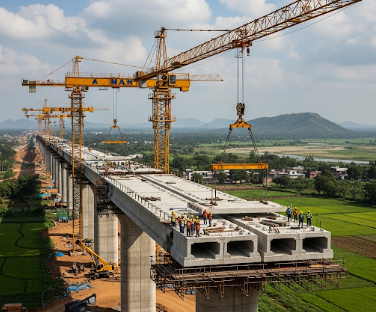
建設技術: ムンバイ湾の海底トンネル工事では、日本が開発した直径15.8mのシールドマシン「ガルーダ1号」が活躍しています。高架建設では「プレキャスト工法」が採用され、従来よりも3倍の速度で工事が進められています。
Construction technology: In the Mumbai Bay underwater tunnel construction, the shield machine “Garuda No. 1,” developed in Japan with a diameter of 15.8m, is playing an active role. In elevated construction, the “precast method” is being adopted, allowing construction to proceed three times faster than conventional methods.
人材育成: バドダラーの訓練センターでは、VR技術を活用したシミュレーターで運転技術やメンテナンス技術を学ぶプログラムが実施されています。日本の「改善」思想や「おもてなし」文化も研修に取り入れられています。
Personnel development:At the Badodara training center, programs are being implemented to learn driving and maintenance techniques using simulators that utilize VR technology. The Japanese concepts of “kaizen” (continuous improvement) and “omotenashi” (hospitality) are also incorporated into the training.
インドが日本を選んだ理由/Why India Chose Japan
秘密テストの存在: 2014年にインド政府が極秘で実施した高速鉄道技術のテストで、日本の技術が他の国(中国、フランス、ドイツ)を圧倒しました。特に豪雨テストでは、日本の車両だけが完全防水性能を実証しました。
Secret Test Existence: In a top-secret high-speed rail technology test conducted by the Indian government in 2014, Japanese technology outperformed other countries (China, France, Germany). In particular, during the torrential rain test, only Japanese vehicles demonstrated complete waterproofing.
圧倒的な安全性: 日本の新幹線は開業以来60年間、乗客の死亡事故がゼロという驚異的な安全記録を持っています。この実績が、安全性を最優先するインド政府の信頼を獲得しました。
Overwhelming safety: Japan’s Shinkansen bullet train has an amazing safety record of zero passenger fatalities in the 60 years since its opening. This achievement has earned the trust of the Indian government, which prioritizes safety above all else.

プロジェクトの経済的・社会的な影響/Economic and social impact of the project
経済効果: 建設予定地周辺の地価が平均30%上昇し、「ジャパンタウン」と呼ばれる日系企業地区も形成されつつあります。今後5年間で10万人の新規雇用創出が見込まれ、年間経済効果は1兆円に達すると試算されています。
Economic impact: Land prices around the planned construction site have risen by an average of 30%, and a Japanese business district called “Japan Town” is also beginning to form. The creation of 100,000 new jobs is projected over the next five years, and the annual economic effect is estimated to reach 1 trillion yen.
技術の進化: このプロジェクトは、日本の次世代技術(AI、IoT、5G、量子暗号など)の実証実験の場ともなっており、これらの技術は将来的に日本の新幹線にも導入される予定です。
Technological Evolution: This project also serves as a field for demonstration experiments of Japan’s next-generation technologies (AI, IoT, 5G, quantum cryptography, etc.), and these technologies are planned to be introduced to Japan’s Shinkansen bullet trains in the future.
社会の変化: プロジェクトに携わるインド人技術者たちは、日本の時間厳守の文化に感銘を受けており、この価値観がインド社会全体に広がりつつあります。インド工科大学では、日本の鉄道工学コースが新設されるなど、教育分野にも影響を与えています。
Social change: Indian engineers involved in the project are impressed by Japan’s culture of punctuality, and this value is spreading throughout Indian society. This is also impacting the education sector, with new Japanese railway engineering courses being established at the Indian Institutes of Technology.