日本人は古来より、自然との調和と共生を重んじてきました。例えば、家屋を建てる際に木材を100本伐採すれば、必ずその後に100本の苗木を植えるという習慣がありました。こうした持続可能な営みによって、国土の約7割を占める豊かな森林が維持されてきたのです。
The Japanese have long valued harmony and coexistence with nature. For example, when building a house, there was a custom of planting 100 seedlings after cutting down 100 trees. Thanks to these sustainable practices, the rich forests that cover about 70% of the country have been maintained.
この森林は、山や急峻な地形が多い日本の国土を、土砂崩れなどの災害から守る「緑のダム」としての役割を果たしてきました。さらに、森林が蓄えた雨水は、濾過されてミネラル豊富な水となり、川を経て海へと供給されます。この栄養豊かな水が、日本の豊かな海産資源を育む源となってきました。すなわち、日本の森林と海は密接に結びつき、日本人の暮らしと文化、そして食の基盤を根本から支えてきたと言えます。
This forest has served as a “green dam,” protecting Japan’s land, which is characterized by mountains and steep terrain, from disasters such as landslides. Furthermore, rainwater stored in the forest is filtered and becomes mineral-rich water, which is supplied to the sea via rivers. This nutrient-rich water has been the source of Japan’s abundant marine resources. In other words, Japan’s forests and seas are closely linked, fundamentally supporting the lives, culture, and food base of the Japanese people.
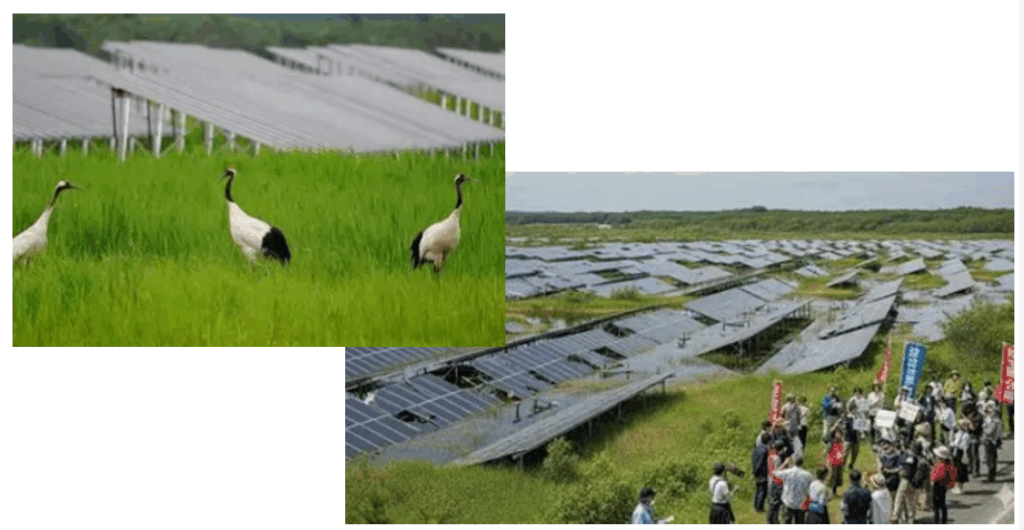
「再エネ推進」の美名のもと、過度なソーラーパネル事業が日本の自然を破壊していますが、高市政権が発足し、この状況に歯止めがかかることを期待します。ソーラーパネルの設置場所は、慎重に選定されるべきであり、環境アセスメントを厳格に行う必要があります。また、地域住民への十分な説明と理解を得ることも不可欠です。再エネ推進と自然保護の両立を目指し、持続可能な社会を構築していくことが重要です。
Under the guise of “promoting renewable energy,” excessive solar panel projects are destroying Japan’s natural environment. We hope that the Takaichi administration will put a stop to this situation. The installation locations for solar panels should be carefully selected, and environmental assessments should be carried out rigorously. Furthermore, it is essential to provide sufficient explanation and gain understanding from local residents. It is important to aim for a balance between promoting renewable energy and protecting nature, and to build a sustainable society.
- 高市政権によるメガソーラー規制強化の方針/Policy to strengthen regulations on mega solar by the Takaichi administration
- メガソーラー普及の背景と問題点/Background and problems with the spread of mega solar power plants
- 政治的対立軸としてのメガソーラー規制/Mega solar regulation as a political conflict axis
- 欧米では中国産メガソーラー輸入禁止/In Western countries, the import of Chinese mega solar panels is prohibited.
高市政権によるメガソーラー規制強化の方針/Policy to strengthen regulations on mega solar by the Takaichi administration
規制強化の表明: 高市苗内閣は、外国製パネルが国土を埋め尽くす無秩序なメガソーラー(大規模太陽光発電所)に対し、法的規制を強化する方針を打ち出しました。高市総理は「私たちの美しい国土を外国製の太陽光パネルで埋め尽くすことには猛反対だ」と述べ、太陽光などの補助金制度の見直しを主張しました。これは経済安全保障や国益重視の立場からの発言と見られています。
Declaration of Strengthened Regulations: The Takaichi Cabinet has announced a policy to strengthen legal regulations against chaotic mega-solar power plants (large-scale solar power generation facilities) where foreign-made panels are filling the country. Prime Minister Takaichi stated, “I am strongly opposed to filling our beautiful national land with foreign-made solar panels,” and insisted on reviewing the subsidy system for solar power and other sources. This is seen as a statement from the standpoint of economic security and emphasis on national interests.
また、石原環境大臣は、自然破壊や土砂崩れにつながる「悪い太陽光」は規制していく必要があるとし、地域との共存が図れないような開発は認めない方針を改めて示しました。
Minister of the Environment Ishihara also stated that it is necessary to regulate “bad solar power” that leads to environmental destruction and landslides, and reiterated the policy of not approving development that does not coexist with the local community.
メガソーラー普及の背景と問題点/Background and problems with the spread of mega solar power plants
日本でメガソーラーが急増したのは、2012年の固定価格買い取り制度(FIT制度/民主党野田内閣)導入以降です。これにより、地方の山林開発や外資系(特に中国系)企業の参入が増加しました。中国への依存構造: 太陽光パネルの主要部品の生産能力の8割が中国に集中しており、メガソーラーの拡大は結果的に中国の産業利益を支える構造を作り出してしまったと指摘されています。
The rapid increase in mega-solar power plants in Japan began after the introduction of the feed-in tariff (FIT) system in 2012 (under the Democratic Party’s Noda Cabinet). This led to increased development of mountain forests in rural areas and the entry of foreign-affiliated (especially Chinese) companies. Dependence on China: It has been pointed out that 80% of the production capacity of major components for solar panels is concentrated in China, and the expansion of mega-solar power has resulted in a structure that supports China’s industrial interests.
メガソーラー普及はエネルギー安全保障上のリスクであり、サプライチェーンが特定の国(中国)に集中することで、関係悪化などによる寸断リスクが大きく高まると警鐘を鳴らしています。つまり、日中の間に外交問題が発生した場合、中国側が意図的に電力の送電を止める可能性もあり得るのです。
The spread of mega-solar power plants is an energy security risk, and the concentration of the supply chain in a specific country (China) significantly increases the risk of disruption due to deteriorating relations. In other words, if a diplomatic problem arises between Japan and China, there is a possibility that the Chinese side could intentionally stop the transmission of electricity.
電気料金の一部として徴収される「再生可能エネルギー発電促進賦課金(再エネ賦課金)」は、年々増加傾向にあり、2025年度には3兆円を超える見込みです。この賦課金の一部が、日本のFIT事業認定を多数取得している中国系企業や個人に流れ、中国のパネルメーカーを潤しているという指摘があります。ちなみに、再エネ賦課金は一世帯あたり、年間で平均2万円ぐらい徴収されています。
The “Renewable Energy Power Promotion Surcharge (renewable energy surcharge),” which is collected as part of electricity bills, has been increasing year by year and is expected to exceed 3 trillion yen in fiscal 2025. It has been pointed out that a portion of this surcharge flows to Chinese-affiliated companies and individuals who have acquired many FIT business certifications in Japan, benefiting Chinese panel manufacturers. Incidentally, the renewable energy surcharge is collected at an average of about 20,000 yen per household per year.
政治的対立軸としてのメガソーラー規制/Mega solar regulation as a political conflict axis
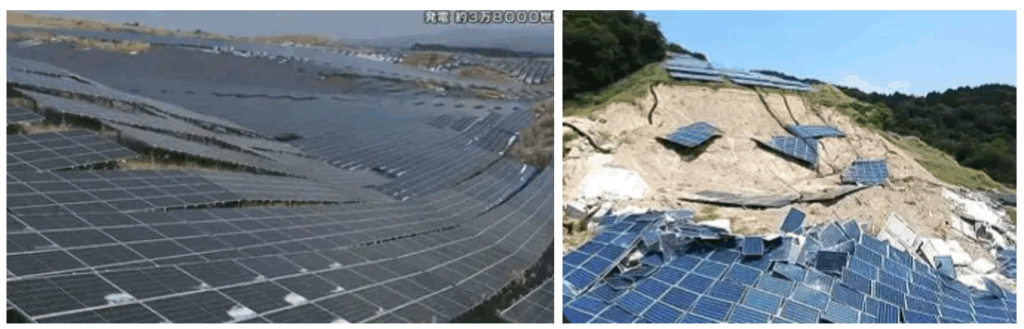
and panels destroyed by the typhoon
高市総理のメガソーラー反対方針は、単なる環境政策ではなく、対中政策の一環であり、「国家安全保障の観点から行き過ぎた親中利権の排除」と位置づけることができます。高市政権の方針は、国内に広がった「中国と絡む利権」をリセットしようとする動きであり、国内の親中派と見られる政治勢力との距離を置くエネルギー政策への転換であると分析できます。
Prime Minister Takachi’s policy of opposing mega-solar power is not simply an environmental policy, but rather part of a policy towards China, and can be positioned as “excluding excessive pro-China vested interests from the perspective of national security.” The Takachi administration’s policy is an attempt to reset the “vested interests involving China” that have spread within Japan, and can be analyzed as a shift in energy policy to distance itself from political forces seen as pro-China within the country.
自民党総裁選においても、高市氏を支持する「保守派(脱中国依存・国益重視)」と、中国利権を死守しようとする「リベラル派(親中・自然エネルギー容認派)」という対立軸が明確になったといえます。
It can be said that in the Liberal Democratic Party presidential election, the axis of opposition has become clear: the “conservatives (decoupling from China dependency, prioritizing national interests)” who support Ms. Takaichi, and the “liberals (pro-China, pro-natural energy)” who are trying to protect Chinese interests.
欧米では中国産メガソーラー輸入禁止/In Western countries, the import of Chinese mega solar panels is prohibited.
欧米ではすでに中国産のメガソーラーの輸入は禁止しています。2022年、米国では「ウイグル強制労働防止法 (UFLPA)」の法律を施行し、新疆ウイグル自治区で製造された製品、または同自治区の原材料を一部でも使用している製品について、強制労働によって作られていないことを企業が証明しない限り、原則として輸入を禁止しています。
In Europe and the United States, the import of Chinese mega solar panels is already prohibited. In 2022, the United States enacted the Uyghur Forced Labor Prevention Act (UFLPA), which, in principle, prohibits the import of products manufactured in the Xinjiang Uyghur Autonomous Region, or products that use even a portion of raw materials from the region, unless companies can prove that they were not made with forced labor.
さらに、太陽光パネルの主要な原料であるポリシリコンの多くが新疆ウイグル自治区で生産されているため、この規制は中国産太陽光パネルのサプライチェーン全体に大きな影響を与えています。これらの規制は、貿易摩擦の枠を超え、経済安全保障と人権・価値観という、欧米が重視する二つの側面から、中国との戦略的な競争の一環として行われています。
Furthermore, since much of the polysilicon, which is the main raw material for solar panels, is produced in the Xinjiang Uyghur Autonomous Region, these regulations have a significant impact on the entire supply chain of Chinese solar panels. These regulations go beyond trade friction and are being implemented as part of a strategic competition with China from two aspects that Europe and the United States emphasize: economic security and human rights and values.