- 笑いの力で権威を無力化/Neutralize authority with the power of laughter.
- 恐怖を無効化する「大喜利外交」/”Ogiri diplomacy” that nullifies fear
- 世界に広がる「ユーモアの防衛線」/A “humor defense line” spreading around the world.
- 笑いは自由と共感の最大の武器/Laughter is the greatest weapon of freedom and empathy.
- 識別と検閲が困難な「曖昧な信号」/Ambiguous signals that are difficult to identify and censor
- 国境と言語を超える連帯感/Solidarity that transcends borders and languages
- 権威を解体する力/The power to dismantle authority
- 「笑い」を武器化する日本文化/The Japanese culture of weaponizing “laughter”
笑いの力で権威を無力化/Neutralize authority with the power of laughter.
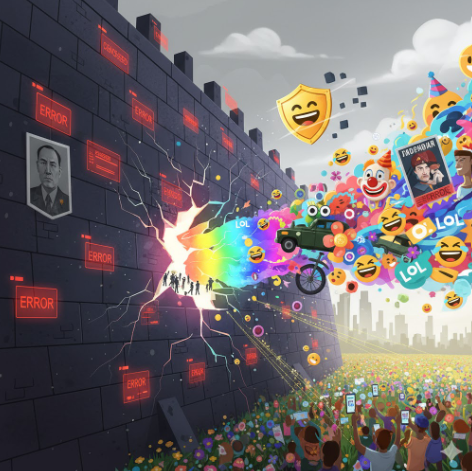
「笑い」は、国際政治における新たな「非武装の兵器」となりました。近年、ある権威主義国家がSNS上で日本に向けた威圧的な投稿は、恐怖を引き起こすどころか、日本のネットユーザーによって即座に「大喜利」のネタへと変換され、結果的にその権威を自ら失墜させる事態となりました。この現象は、単なるネットミームの流行に留まらず、恐怖や傲慢といった抑圧の感情を無力化する「日本外交の勝利」を象徴しています。
※「大喜利」とは、おおむね「司会者が出す《お題》に対して、複数の回答者が、当意即妙に洒落の利いた回答をして面白さを競う」といった遊び・余興・演目、を指す意味で用いられる語。このイメージはテレビ番組「笑点」の影響を色濃く受けて成立しものです。
“Laughter” has become a new “unarmed weapon” in international politics. In recent years, when an authoritarian state posted intimidating messages targeting Japan on social media, far from instilling fear, Japanese netizens instantly transformed them into “Japanese Oogiri” comedy material. This ultimately led to the state undermining its own authority. This phenomenon is not merely a passing internet meme trend; it symbolizes a “victory for Japanese diplomacy” that neutralizes oppressive emotions like fear and arrogance.
※“Japanese Oogiri” generally denotes a game, entertainment, or performance where “a host presents a theme, and multiple participants compete to deliver witty, humorous responses on the spot.” This concept was heavily influenced by the television program “Shoten.”
恐怖を無効化する「大喜利外交」/”Ogiri diplomacy” that nullifies fear
この「大喜利外交」の核心は、「笑い」が「恐怖」「脅し」「傲慢」「権威」などに打ち勝つという極めてシンプルな原理にあります。権威主義国家の威嚇は、国民の間に恐怖を広め、体制への恭順を促すことを目的としています。しかし、日本のネット民は、その厳粛なメッセージやグラフィックをパロディ化し、滑稽な「お題」として扱うことで、威嚇の本質である「威厳」を完全に剥奪しました。
The core of this “Oogiri Diplomacy” lies in the extremely simple principle that “laughter” overcomes “fear,” “threats,” “arrogance,” and “authority.” The threats of authoritarian states aim to spread fear among the people and encourage obedience to the regime. However, Japanese internet users have completely stripped away the “dignity,” which is the essence of intimidation, by parodying the solemn messages and graphics, and treating them as comical “themes.”。
この笑いの連鎖は、恐怖に屈しない集団的な意思表示として機能しました。怒りや直接的な反論ではなく、ユーモアという最も平和的な手段で応答することで、国家間の緊張を「茶番」として無効化し、相手の政治的パフォーマンスを逆手に取りました。
This chain of laughter functioned as a collective display of defiance against fear. Instead of anger or direct opposition, responding with humor, the most peaceful means, invalidated the tension between nations as a “farce,” turning the opponent’s political performance against itself.
恐怖と情報統制を前提とする権威国家は、論理的な批判や武力による対抗策には対処できても、予測不能で自由な民衆の笑いには対応できません。投稿を削除すれば「逃げた」と揶揄され、続ければ「ネタを提供した」と嘲笑されるという袋小路に追い込まれました。「笑い」はより多くの人々が共感する「情報戦」の新兵器と言えます。しかも、某権威主義国家には絶対に真似できない戦い方ですね。
Authoritarian states, which rely on fear and information control, can deal with logical criticism or armed resistance, but they cannot cope with the unpredictable and free laughter of the people. They are trapped in a dead end where deleting a post is mocked as “running away,” and continuing it is ridiculed as “providing more material.” “Laughter” can be called a new weapon in “information warfare” that resonates with more people. Moreover, it is a fighting style that a certain authoritarian state can never imitate.
世界に広がる「ユーモアの防衛線」/A “humor defense line” spreading around the world.
この現象は、日本国内に留まらず、世界中の自由主義陣営に強い共感を呼び、「ユーモアの防衛線」として拡散しました。台湾をはじめとする国々のユーザーは、日本のパロディフォーマットを採用し、権威への抵抗の意思を共有しました。これは、イデオロギーや軍事同盟とは異なる、文化的な連帯を形成しました。
This phenomenon not only remained within Japan but also resonated strongly with liberal camps around the world, spreading as a “humorous line of defense.” Users in countries such as Taiwan adopted the Japanese parody format, sharing their will to resist authority. This formed a cultural solidarity, distinct from ideological or military alliances.
日本国内では、この「笑いの力」を情報戦における戦略的な資源として捉え、「文化安全保障」や「ユーモア防衛」といった新たな外交概念として議論されるようになりました。これは、国家が国民の自由な表現を尊重し、それを外交力の一部とする成熟した民主主義の証です。
Within Japan, this “power of laughter” has come to be seen as a strategic resource in information warfare, and is being discussed as a new diplomatic concept such as “cultural security” and “humor defense.” This is proof of a mature democracy in which the state respects the free expression of its citizens and makes it part of its diplomatic power.。
怒りや対立ではなく、知性と機知に富んだ笑いで対応する日本の姿勢は、国際社会において「恐怖に屈しない国」「自由な国」というポジティブなイメージを確立しました。今や、日本の笑いは、経済力や軍事力を超える最も強力なソフトパワーとなり、世界中の人々の共感を呼んでいます。
Japan’s stance of responding with intelligence and witty humor, rather than anger or confrontation, has established a positive image in the international community as a “country that does not succumb to fear” and a “free country.” Now, Japanese humor has become the most powerful soft power, surpassing economic and military strength, and resonates with people all over the world.
笑いは自由と共感の最大の武器/Laughter is the greatest weapon of freedom and empathy.
「笑い」は、傲慢な権威や不当な脅しを最も痛烈かつ平和的に無力化する武器です。この一連の出来事は、「笑い」が単なる娯楽ではなく、自由な社会を維持するための防衛インフラであることを証明しました。恐怖によって支配しようとする試みに対し、日本は「恐れず、怒らず、ただ笑う」という姿勢で応じ、情報戦において決定的な勝利を収めたと言えます。
Laughter is the most poignant and peaceful weapon to disarm arrogant authority and unjust threats. This series of events proves that laughter is not just entertainment, but a defense infrastructure for maintaining a free society. In response to attempts to rule by fear, Japan responded with the attitude of “Do not fear, do not be angry, just laugh,” and it can be said that they achieved a decisive victory in the information war.
笑いはアルゴリズムの敵ではなく、検閲の壁を越える力を持ちます。この「大喜利外交」こそが、21世紀の国際政治における日本発の革新的な戦略であり、世界の民主主義陣営が学ぶべき新たな「非暴力の抑止力」なのです。「笑い」が権威主義国家の検閲や情報統制を回避する「新兵器」となるのは、その性質が既存の抑圧システムと根本的に相反するからです。
Laughter is not the enemy of algorithms, but rather a force that can overcome censorship. This “Oogiri Diplomacy” is an innovative strategy originating from Japan in 21st-century international politics, and a new “non-violent deterrent” that the world’s democracies should learn. The reason why “laughter” becomes a “new weapon” to circumvent censorship and information control in authoritarian states is because its nature is fundamentally contrary to existing systems of oppression.
識別と検閲が困難な「曖昧な信号」/Ambiguous signals that are difficult to identify and censor
権威主義国家の情報統制システムは、主に特定のキーワード(例:「民主化」「人権」「批判」等々)や明確な論理的対立(例:体制への直接的な抗議文)を検知・削除するように設計されています。パロディやミーム、大喜利といったユーモアは、多くの場合、文脈依存性が高く、その本質が「ジョーク」であるため、明確な政治的批判として即座に識別されにくい性質を持っています。
Information control systems in authoritarian states are primarily designed to detect and remove specific keywords (e.g., “democratization,” “human rights,” “criticism,” etc.) and clear logical oppositions (e.g., direct protests against the regime). Humor such as parody, memes, and comedic improvisation (Oogiri), is often highly context-dependent, and because its essence is a “joke,” it is difficult to immediately identify as clear political criticism.
表面上は単なる「滑稽な画像」や「くだらないお遊び」に見えるため、アルゴリズムによる自動検閲システムや、人の目による判断の「グレーゾーン」を突きやすくなります。
On the surface, it appears to be a mere “funny image” or a “trivial game,” making it easier to slip through algorithmic censorship systems and the “gray zone” of human judgment.
国境と言語を超える連帯感/Solidarity that transcends borders and languages
笑いやユーモアは、怒りや論理的批判よりも感情的な共感を瞬時に生み出し、言葉の壁を越えて急速に拡散します。政治的な主張に「いいね」を押すのは勇気がいる行為かもしれませんが、面白いミーム(模倣して拡大するという現象))に「笑う」ことは心理的な抵抗が低く、集団的な参加を促します。「いいね」は手元にある最も安価な意思表明と言えます。
Laughter and humor generate emotional resonance more instantaneously than anger or logical criticism, spreading rapidly beyond language barriers. While “liking” a political statement may be an act of courage, “laughing” at a funny meme (a phenomenon that imitates and spreads) has lower psychological resistance, encouraging collective participation. A “like” can be said to be the cheapest expression of intent at hand.
複雑な政治的メッセージが、一枚の画像や短いフレーズに凝縮(ミーム化)されることで、国境や言語を超えた「文化的な連帯」を形成し、検閲側が一つを削除しても次々と新しいバリエーションが生まれる「いたちごっこ」の状態を生み出します。
Complex political messages are condensed (memified) into a single image or short phrase, forming a “cultural solidarity” that transcends borders and languages, creating a “cat-and-mouse game” where even if the censors delete one, new variations are created one after another.
権威を解体する力/The power to dismantle authority
権威主義体制が最も重要視するのは、国民に対する「威厳」と「恐怖」の維持です。ユーモアは、この権威の土台そのものを揺るがします。権威側が発した厳粛なメッセージや威圧的なビジュアルをパロディ化し、滑稽なものとして扱うことで、その「威厳」を剥奪します。
The most important thing for an authoritarian regime is maintaining “dignity” and “fear” among the people. Humor shakes the very foundation of this authority. By parodying solemn messages and intimidating visuals issued by those in power and treating them as ridiculous, it deprives them of their “dignity.”
検閲当局が本気のジョークを削除したり、真面目に反論したりすると、それ自体が滑稽な行動となり、「体制がユーモアに怯えている」という新たな笑いと嘲笑のネタを提供してしまいます。つまり、「削除すれば逃げた、続ければネタ提供」という、権威側にとっては対応不可能な「袋小路」に追い込むことができます。
When censorship authorities remove genuine jokes or seriously refute them, it becomes a ridiculous act in itself, providing new material for laughter and ridicule, suggesting that “the regime is afraid of humor.” In other words, it can drive the authorities into a dead end where “if they delete it, they look like they ran away; if they continue, they provide more material,” making it impossible for them to respond effectively.
このように、「笑い」は単なる娯楽ではなく、情報戦において検知・削除が困難であり、かつ体制の求心力を内側から侵食する、極めて効果的な「非暴力の抑止力」として機能するのです。
Thus, “laughter” is not merely entertainment, but functions as an extremely effective “non-violent deterrent” in information warfare, as it is difficult to detect and delete, and erodes the regime’s centripetal force from within.
「笑い」を武器化する日本文化/The Japanese culture of weaponizing “laughter”
日本人が近隣の超権威主義大国を恐れないのは、繊細な日本文化に潜む「笑いの文化」があったからかも知れません。「笑い」とは高度な文明の証拠であり、社会の多様性や自由な表現を保障する土壌があってこそ成立するものです。そのため、日本のネット民によるパロディや大喜利的な応答は、単なる娯楽や風刺を超えて、自由を守るための知的な対抗手段として機能しています。
The reason why Japanese people are not afraid of the neighboring hyper-authoritarian superpower may be because of the “culture of laughter” that lies within the delicate Japanese culture. “Laughter” is proof of a highly developed civilization, and it is established only when there is a foundation that guarantees social diversity and freedom of expression. For this reason, parodies and humorous responses by Japanese netizens function as an intellectual countermeasure to protect freedom, going beyond mere entertainment and satire.
こうした「笑いの文化」が、現代日本の透明性や共感、倫理観、そして正義感といった価値観と結びつき、国際社会の中で独自の存在感を示す大きな要因となっています。日本文化においては、たとえ対立関係にある人物同士であっても、共に笑顔を共有する行為は相互の共感が生じる現象として捉えられています。改めて、日本の笑いのセンスの深さと、それを外交の武器として活用する日本の手腕に感銘を受けます。
This “culture of laughter,” combined with modern Japan’s values of transparency, empathy, ethics, and a sense of justice, is a major factor in demonstrating its unique presence in the international community. In Japanese culture, even people in conflict can find mutual empathy through the act of sharing a smile. Once again, I am impressed by the depth of Japan’s sense of humor and its ability to utilize it as a diplomatic tool.