「見えない盾」による24時間監視体制/24-hour surveillance with “invisible shields”
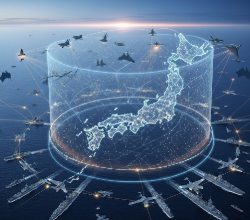
陸・海・空の自衛隊は、レーダー網、イージス艦、潜水艦、人工衛星などを駆使した情報ネットワークにより、敵対勢力の動向を常時監視し、武力衝突を未然に防いでいます。元海上自衛官は、この監視網を「日本の目」と呼び、戦争を防ぐ「見えない国境線」を守る仕組みだと語っています。
The Ground, Maritime, and Air Self-Defense Forces constantly monitor the movements of hostile forces using an information network that makes full use of radar networks, Aegis ships, submarines, artificial satellites, and more, thereby preventing armed conflicts. A former Maritime Self-Defense Force official calls this surveillance network “Japan’s eyes,” and says it is a system that protects the “invisible border” that prevents war.
AI技術も導入され、過去のデータから敵の行動パターンを予測する体制が整備されており、最終的な判断は分析官が下します。
AI technology has also been implemented, and a system is in place to predict enemy behavior patterns from past data, with the final decision being made by an analyst.
国際連携による強力な抑止力の構築も重要な課題です。日本の防衛は、日米同盟を軸とした国際連携によって支えられています。日米安全保障条約と米軍基地の存在は、日本への攻撃が即座に米軍の介入を招くという強力な抑止力となっています。さらに、オーストラリアやイギリスなど、志を同じくする国々との共同演習を通じて、多国間の抑止ネットワークが構築されています。
Building a strong deterrent through international cooperation is also an important issue. Japan’s defense is supported by international cooperation centered on the Japan-U.S. alliance. The Japan-U.S. Security Treaty and the presence of U.S. military bases serve as a strong deterrent, as an attack on Japan would immediately trigger U.S. military intervention. Furthermore, a multilateral deterrence network is being built through joint exercises with countries that share the same values, such as Australia and the United Kingdom.
時代の変化に対応する戦略/Strategies to meet the changing times
中国、北朝鮮、ロシアなどの脅威が高まる中、日本は「専守防衛」の原則を維持しつつ、2022年末には「反撃能力」の保有を閣議決定しました。これは、攻撃を受けた場合に限り、敵の発射基地などを無力化する能力で、積極的な抑止力として位置づけられています。
Amid growing threats from China, North Korea, Russia, and others, Japan, while maintaining its principle of “exclusively defense-oriented,” decided at the end of 2022 to possess “counterstrike capabilities.” This is the ability to neutralize enemy launch bases, etc., only in the event of an attack, and is positioned as an active deterrent.
米ランド研究所の上級研究員は、この日本の防衛戦略を「軍事的抑止と外交的抑止を巧みに組み合わせた予防型安全保障モデル」と評価。軍事力だけでなく、外交・経済・国際的信頼関係を統合することで、戦争を回避する先進的なモデルを世界に示していると述べています。
A senior researcher at the Rand Corporation assesses this Japanese defense strategy as “a preventative security model that skillfully combines military and diplomatic deterrence.” He states that by integrating not only military force but also diplomacy, economics, and international trust, Japan is demonstrating to the world an advanced model for avoiding war.
孫子の兵法との共鳴/Resonance with Sun Tzu’s Art of War

孫子の兵法は、「戦わずして人の兵を屈するは善の善なるものなり」(戦わずして敵を屈服させることこそ最善の策である)と説きます。日本の防衛戦略は、この思想を現代的に解釈し、実践しています。
Sun Tzu’s The Art of War states, “To subdue the enemy without fighting is the acme of skill.” Japan’s defense strategy interprets and implements this idea in a modern way.
抑止力の構築:日本の防衛は、日米同盟を基盤に、外交と軍事を融合させることで、相手に「攻撃しても得るものはない」と思わせる抑止力を形成しています。これは、武力衝突を回避し、敵の意志を挫くという孫子の思想に通じます。
Building Deterrence: Japan’s defense, based on the Japan-U.S. alliance, integrates diplomacy and military capabilities to create a deterrent that makes the opponent think, “There is nothing to gain from attacking.” This aligns with Sun Tzu’s philosophy of avoiding armed conflict and thwarting the enemy’s will.
情報戦の重視:孫子の「彼を知り己を知れば百戦危うからず」(敵と味方の状況を正確に把握すれば、何度戦っても危険はない)という言葉の通り、日本はレーダー、人工衛星、AIなどを活用した24時間体制の監視網を構築し、敵の意図を早期に察知して衝突を防いでいます。
Emphasizing information warfare: As Sun Tzu said, “If you know the enemy and know yourself, you need not fear the result of a hundred battles” (if you accurately grasp the situations of both the enemy and yourself, there is no danger no matter how many times you fight). Following this principle, Japan is constructing a 24-hour surveillance network utilizing radar, satellites, AI, and other technologies to detect the enemy’s intentions early and prevent conflicts.
「専守防衛」と「反撃能力」:日本の「専守防衛」は、相手から攻撃された場合にのみ反撃するという姿勢であり、「不敗の態勢を整えて敵の敗北を待つ」という孫子の戦略と一致します。さらに、「反撃能力」は敵の攻撃を思いとどまらせる積極的な抑止力として、「戦わずして勝つ」ための手段と位置づけられます。
“Exclusive defense” and “counterstrike capabilities”: Japan’s “exclusive defense” is a stance of only counterattacking when attacked by the opponent, which aligns with Sun Tzu’s strategy of “preparing an invincible position and waiting for the enemy’s defeat.” Furthermore, “counterstrike capabilities” are positioned as a means to “win without fighting,” serving as an active deterrent to dissuade enemy attacks.
知略の継承者としてのAI:かつて地上にあった戦場は、今やサイバー空間や情報空間に広がっています。「彼を知り己を知れば百戦危うからず」という孫子の言葉は、この現代の情報戦において新たな意味を持っています。ロシア・ウクライナ戦争に見られるように、サイバー攻撃や偽情報が新たな戦闘手段となる中、AIは敵の意図を予測し、戦略を支援する「現代の軍師」となりつつあります。
AI as a Successor to Strategy: The battlefields that once existed on land have now spread to cyberspace and the information domain. Sun Tzu’s saying, “Know the enemy and know yourself, and you will not be endangered in a hundred battles,” holds new meaning in this modern information warfare. As seen in the Russia-Ukraine war, where cyberattacks and disinformation have become new means of combat, AI is becoming a “modern strategist” that predicts the enemy’s intentions and supports strategy.
「見えない戦場」における情報優位:孫子の兵法は、戦場の形が変わっても「情報の優位性が勝利を導く」という原則を貫いていました。AI技術は膨大な過去データを解析し、敵の行動パターンを予測することで、この原則を技術的に具現化しています。日本では自衛隊内でAIが監視網と連携し、分析官の判断を支援する体制が整備されており、AIは「知る」ことに特化した存在として、「戦わずして勝つ」ための判断材料を提供しています。
Information superiority in the “invisible battlefield”: Sun Tzu’s Art of War maintained the principle that “information superiority leads to victory,” even as the shape of the battlefield changed. AI technology embodies this principle technically by analyzing vast amounts of past data and predicting enemy behavior patterns. In Japan, a system is being developed within the Self-Defense Forces in which AI works with surveillance networks to support the judgments of analysts. AI, as an entity specializing in “knowing,” provides the decision-making material to “win without fighting.”
倫理と技術の交差点/Intersection of Ethics and Technology
AIによる判断には倫理的な制約が不可欠です。情報の誤認や偏りが戦略を誤らせるリスクも存在するため、技術の進化とともに、「人間の知恵」と「AIの知略」の協働が求められます。孫子が知略と道義の両立を重んじたように、AIの活用もまた、倫理と責任の上に築かれるべきです。
Ethical constraints are essential for AI-driven decisions. The risk of misinformation or bias misleading strategies also exists, so collaboration between “human wisdom” and “AI tactics” is needed along with technological evolution. Just as Sun Tzu valued the balance of strategy and morality, the use of AI should also be built on ethics and responsibility.
日本の防衛戦略は、情報優位性、予測の精度、そして判断の迅速性を統合することで、「戦わずして勝つ」という思想を深化させています。これは、旧来の戦争をはるかに超えた、知略と技術、倫理と抑止が交差する現代の安全保障思想であり、まさに「孫子の兵法・進化論」と呼ぶにふさわしいといえるでしょう。
Japan’s defense strategy deepens the philosophy of “winning without fighting” by integrating information superiority, accuracy of prediction, and speed of decision-making. This is a modern security concept that far transcends conventional warfare, intersecting strategy, technology, ethics, and deterrence, and can be truly called “Sun Tzu’s Art of War: Evolution.”