世界が注目する日本の「感性の文明」/Japan’s “Civilization of Sensibility” attracting global attention
ポップカルチャー、和食文化、最先端の工業技術に至るまで、今、まるで世界の中心であるかのように、日本に世界中の関心が集まっています。その影響を受け、日本文学を研究する大学や研究機関が増えている状況です。そうした研究の中で、日本の平安時代に清少納言や紫式部といった女性たちが「書く力」で築いた「感性の文明」が、いかに世界から注目され、現代の日本文化の根底にまで影響を与えているかが深く探求されています。
From pop culture and Japanese cuisine to cutting-edge industrial technology, Japan is now the focus of global attention, as if it were the center of the world. Influenced by this, the number of universities and research institutions studying Japanese literature is increasing. Research deeply explores how the “civilization of sensibility” built by women such as Sei Shōnagon and Murasaki Shikibu in Japan’s Heian period through their “writing power” has attracted global attention and deeply influenced the foundations of modern Japanese culture.
「知の革命」ひらがなの誕生/The Birth of Hiragana: A Revolution of Knowledge
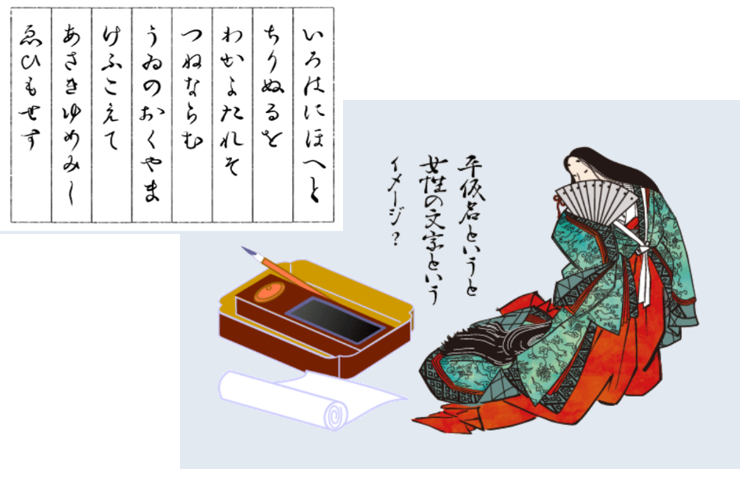
かつて文字は、支配階級の所有物でした。そんな時代に誕生した日本の「ひらがな」は、誰が発明したか特定できません。およそ1000年前、ヨーロッパで女性の教育が重視されていなかった時代に、自然発生的に生まれたと考えられています。
In the past, writing was the property of the ruling class. The inventor of Japan’s “hiragana,” which was created in such an era, cannot be identified. It is believed to have arisen spontaneously around 1000 years ago, at a time when the education of women was not emphasized in Europe.
「ひらがな」は、主に女性や庶民のために作られ、宮廷の女官たちによって洗練された文字です。この「ひらがな」が広まり定着していった流れは、「言葉の民主化」とも呼ばれています。
“Hiragana” was created mainly for women and common people, and was refined by court ladies. The spread and establishment of this “hiragana” is also called “democratization of language.”
女性たちは、漢字が主体の公的文書ではなく、ひらがなを用いて感情や美的感覚、知性を自由に表現しました。ひらがなの特性は、柔軟性や心理描写に優れており、これを駆使した女性たちは日本文化の形成に重要な役割を果たしました。平安時代において政治の主導権は男性が握っていましたが、文化の発展においては女性が中心的存在だったのです。
Women freely expressed their emotions, aesthetic sensibilities, and intellect using hiragana, rather than kanji-based official documents. The characteristics of hiragana, such as its flexibility and excellence in psychological depiction, were fully utilized by these women, who played an important role in shaping Japanese culture. During the Heian period, men held the reins of political power, but women were central figures in the development of culture.
世界文学の原点/Origin of world literature
清少納言の『枕草子』は、世界文学史上最初期の随筆(エッセイ)として海外でも研究されています。ハーバード大学の教授は、1000年前の日本に「感性を教養とした文明」が存在したことを証明していると評価しています。
Sei Shōnagon’s “The Pillow Book” is studied abroad as one of the earliest examples of essays in world literature. A Harvard University professor has praised it as proof that a “civilization that valued sensibility as culture” existed in Japan 1000 years ago.
また、紫式部の『源氏物語』は、前後54帖、100万字を超える大作であり、世界最古の長編小説です。英国BBCは「心理の解剖書」、タイム誌は「人間をこれほどまで正確に描いた最初の文学」と評しました。これは、心理学という言葉が生まれる700年も前に、人間心理を分析する文学を完成させていたことを示しています。
Murasaki Shikibu’s “The Tale of Genji” is a monumental work of over 1 million words in 54 chapters and is the world’s oldest long novel. The British BBC called it “a psychological anatomy,” and Time magazine praised it as “the first literature to depict human beings so accurately.” This demonstrates that she had completed a work of literature analyzing human psychology 700 years before the word “psychology” was even coined.
彼女たちの作品は世界から「共感の知性」として評価されています。英国BBCの特集番組などで、日本の女性作家たちが「世界で最も早く感情を理性(知)に変えた人々」として紹介されました。多くの文明で文字が支配や権力の象徴だったのに対し、日本では女性たちが「共感に基づく知性」を中心に文明を築いたという事実は、海外の研究者や専門家たちに大きな驚きを与えています。
Their work is valued around the world as “the intelligence of empathy.” Japanese women writers have been featured on programs such as the BBC in the UK as “the people who transformed emotion into reason (intelligence) the fastest in the world.” The fact that women in Japan built a civilization centered on “intelligence based on empathy,” in contrast to many civilizations where writing was a symbol of domination and power, has greatly surprised overseas researchers and experts.
1000年も昔、世界に類を見ないほど早く、日本の才能あふれる女流文学者たちは、文学史における重要な転換点を迎え、世界文学の原点とも言えるべき作品群を創造したのです。彼女たちの卓越した文才と豊かな感性によって紡ぎ出された物語や詩は、後世の文学に多大な影響を与え、今日においてもその輝きを失うことなく、私たちを魅了し続けているのです。
A thousand years ago, with unprecedented speed in the world, Japan’s talented female writers reached a major turning point in literary history, creating a body of work that can be called the origin of world literature. The stories and poems spun from their exceptional literary talent and rich sensibility have had a profound influence on later literature, and continue to fascinate us today without losing their brilliance.
現代に息づく「感性の哲学」/”The Philosophy of Sensibility” Alive in the Modern Age
日本の文明は、武力や理性ではなく、美しく感じることが正しく考えることにつながるという「感性の哲学」によって成熟したと評価されています。この思想は、後に「もののあわれ」や「わびさび」といった日本独自の美意識の原流となりました。
Japanese civilization is considered to have matured not through military power or reason, but through a “philosophy of sensibility,” in which feeling beautifully leads to thinking correctly. This idea later became the origin of uniquely Japanese aesthetics such as “mono no aware” (the pathos of things) and “wabi-sabi.”
ハーバード大学では、論理だけでなく「感じ取る力」を重視する日本の教育観や、紫式部の作品がエモーショナル・インテリジェンス(感情の知性)の原点として講義されています。
At Harvard University, a Japanese educational perspective that values not only logic but also the ability to “feel” is emphasized, and Murasaki Shikibu’s works are taught as the origin of emotional intelligence.
現代日本の「おかげ様で」「お疲れ様」といった言葉遣いも、相手の心を想像する間接的な表現や、調和を保つための曖昧な表現です。これらも平安時代の女性たちが磨いた言葉の文化の延長線上にあるとされています。
The expressions “Okagesamade” (thank you for your help) and “Otsukaresama” (thank you for your hard work) in modern Japan are also indirect expressions that imagine the other person’s feelings, and ambiguous expressions to maintain harmony. These are also said to be an extension of the language culture refined by women in the Heian period.
茶道や和歌の文化、さらには日常生活で「整える」という感覚に至るまで、全て彼女たちが育んだ「他者への敬意」や「心への配慮」の精神に繋がっています。彼女たちは、支配や権力のためではなく、心や精神を理解するために文字を書きました。力や政治ではなく、人生の意味を求めたのです。
The culture of tea ceremony and waka poetry, and even the sense of “tidying” in daily life, are all connected to the spirit of “respect for others” and “consideration for the heart” that these women cultivated. They wrote not for domination or power, but to understand the heart and spirit. They sought the meaning of life, not power or politics.
「ひらがな」の誕生、そしてそれが花開いた平安時代の女流文学は、まさに女性たちの手によって創造された、世界に誇るべき独自の文化文明です。それは、騒々しい社会の表舞台とは一線を画した、奥ゆかしい「静かな知性」によって育まれた文明であり、日本人の繊細な感性や、他者への細やかな気遣いの原点として、深く私たちの文化に根ざしていると言えるでしょう。
The birth of “hiragana,” and the blossoming of female literature in the Heian period, is truly a unique culture and civilization to be proud of, created by women. It is a civilization nurtured by a graceful “quiet intelligence,” distinct from the noisy public stage of society, and it can be said to be deeply rooted in our culture as the origin of the Japanese people’s delicate sensibilities and consideration for others.