日本の伝統文化である折り紙は、単なる遊びにとどまらず、長い歴史の中で私たちの生活や精神と深く結びついてきました。一枚の紙から無限の形を生み出す折り紙の歴史を紐解いてみましょう。
Origami, a traditional Japanese culture, is more than just a pastime; it has been deeply intertwined with our lives and spirits throughout its long history. Let’s unravel the history of origami, which creates infinite shapes from a single sheet of paper.
紙の伝来と和紙の誕生/The Introduction of Paper and the Birth of Washi
折り紙のルーツは、7世紀の初め(610年頃)に大陸から紙の製法が伝来したことに始まります。この時期に生まれたのが、日本の気候風土に適した独自の紙である和紙です。当初、紙は主に写経や公文書の記録といった重要な用途で使われていました。貴重な紙は、情報を残すための道具として、当時の人々の生活に欠かせないものとなっていったのです。
The roots of origami trace back to the early 7th century (around 610 AD) when papermaking techniques were introduced to Japan from the Asian continent. It was during this period that washi, a unique type of paper suited to Japan’s climate and natural features, was developed. Initially, paper was primarily used for important purposes like copying sutras and recording official documents. This valuable material became an indispensable tool in people’s lives for preserving information.
神事と礼法に用いられた折り紙/Origami used in Shinto rituals and etiquette
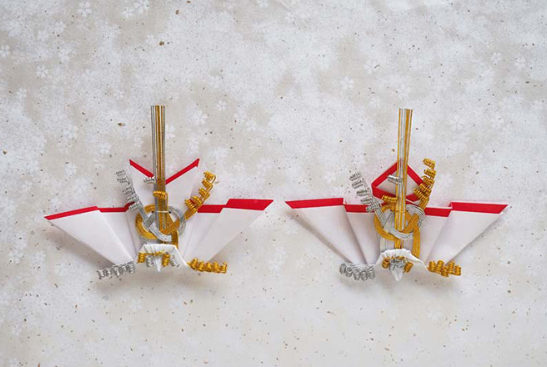
時が経つにつれて、紙は記録用だけでなく、神事にも用いられるようになります。神への供物を包んだり、様々な物を紙で装飾したりするようになりました。特に、室町時代に入ると、小笠原家や伊勢家といった礼儀作法を司る家系によって、様々な礼法が体系化されます。この過程で、贈り物を包む「のし包み」や、結婚式の飾りである「雄蝶雌蝶(おちょうめちょう)」など、現代にも通じる美しい紙の造形が生まれました。これらは、単に物を包むだけでなく、相手への敬意や真心を形にするための重要な役割を担っていたのです。
As time progressed, paper’s role expanded beyond just recording information; it began to be incorporated into Shinto rituals. People started using paper to wrap offerings to the gods and to decorate various objects.
During the Muromachi period (1336-1573) in particular, various codes of etiquette were systematized by influential families like the Ogasawara and Ise clans, who were masters of ceremonial practices. This process led to the creation of beautiful paper designs that are still recognizable today, such as Noshibukuro (decorative envelopes for gifts) and Ochō-mechō (male and female butterfly decorations used in weddings). These paper creations weren’t merely about wrapping items; they played a crucial role in giving form to respect and sincerity towards the recipient.
江戸時代に花開いた庶民の遊び/The common people’s games that flourished in the Edo period
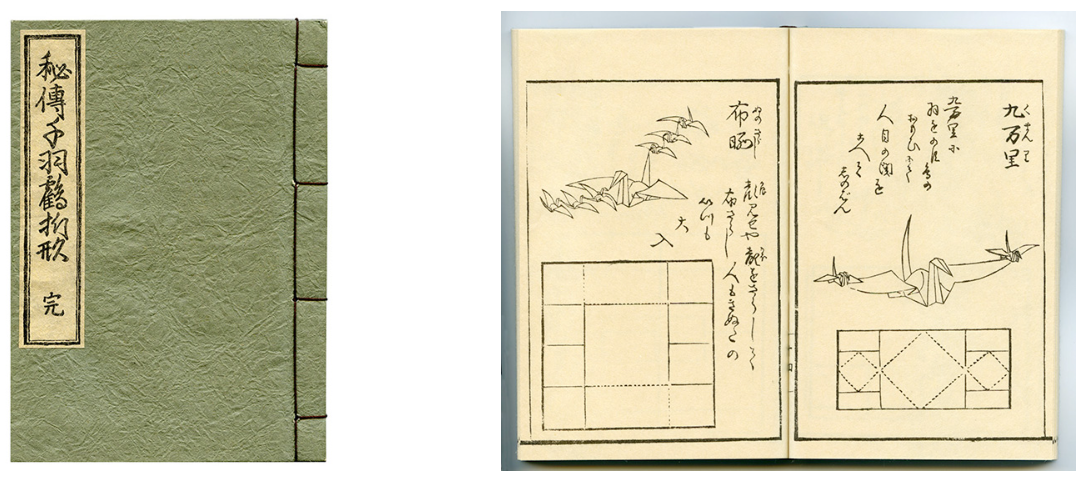
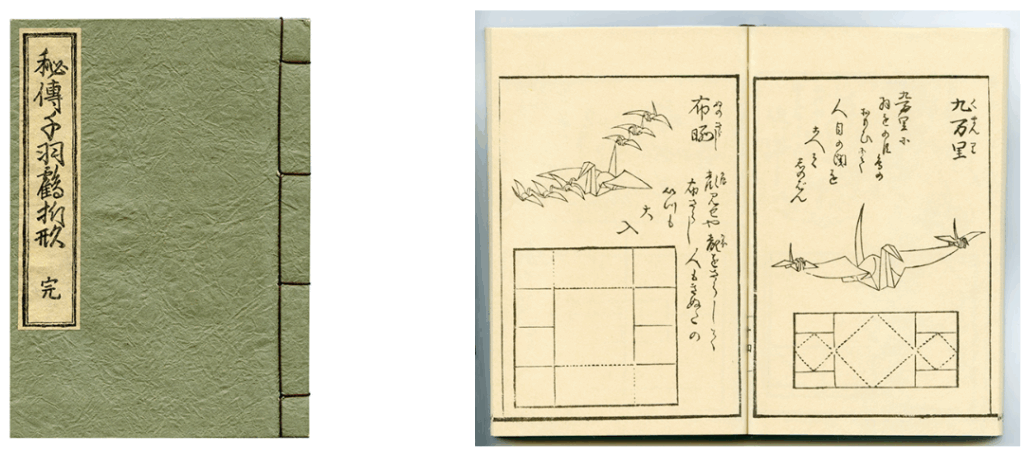
江戸時代に入ると、紙の生産量が飛躍的に増加し、手頃な価格で手に入るようになります。これにより、折り紙は貴族や武家のたしなみから、庶民の間でも広く親しまれる遊びへと発展しました。様々な折り方が考案され、その技術は代々受け継がれていきました。この時代には、折り紙の専門書も出版されており、中でも1797年に刊行された「秘傅千羽鶴折形(ひでんせんばづるおりがた)」は、多種多様な連鶴の折り方を紹介し、当時の人々に大きな影響を与えました。
With the advent of the Edo period (1603-1868), paper production dramatically increased, making it affordable and widely accessible. This shift transformed origami from a pastime enjoyed primarily by nobles and samurai into a popular recreational activity among the general populace. Numerous new folding techniques were devised, and these skills were passed down through generations. This era also saw the publication of specialized origami books. Among them, the “Hiden Senbazuru Orikata” (The Secret of One Thousand Cranes Origami), published in 1797, had a profound impact on people of the time by introducing a wide variety of linked crane folding methods.
現代に息づく折り紙の精神/The Spirit of Origami Lives on Today
明治時代に入ると、折り紙はその教育的効果が注目され、幼稚園の教育にも取り入れられるようになります。指先の器用さや集中力を養い、図形感覚を育む教材として、その価値が再認識されました。さらに、日本の文化として世界各地に紹介され、国境を越えて多くの人々を魅了するようになりました。現在では、世界中に折紙愛好家の団体が多数存在し、新しい折り方の創作や、国際的な交流が活発に行われています。
When the Meiji era (1868-1912) began, origami’s educational benefits gained recognition and it was incorporated into kindergarten education. Its value as a teaching tool for developing dexterity, concentration, and spatial reasoning was re-evaluated.Furthermore, origami was introduced to various parts of the world as a key aspect of Japanese culture, charming people across borders. Today, numerous origami enthusiast organizations exist globally, actively creating new folds and fostering international exchange.
現代において、折り紙は子供から大人まで楽しめる奥深い文化として、その価値が再認識されています。紙を折るというシンプルな行為は、集中力や創造性を高めるだけでなく、完成した作品を通じて達成感や喜びを与えてくれます。
In the modern era, origami is being re-recognized for its profound value as a culture that can be enjoyed by children and adults alike. The simple act of folding paper not only enhances concentration and creativity, but also provides a sense of accomplishment and joy through the completed works.
一枚の平らな紙が、折りたたむことで立体的な形へと変化していく過程は、まさに日本人の精神性や情緒を象徴していると言えるでしょう。物を大切にする心、限られた素材から無限の可能性を見出す知恵、そして何よりも、無形のものを形にする繊細な美意識。折り紙は、そうした日本ならではの文化的なDNAを現代に伝える、貴重な媒体なのかもしれません。
The transformation of a flat sheet of paper into a three-dimensional form through folding truly symbolizes the Japanese spirit and emotion. It embodies the heart of cherishing objects, the wisdom of finding infinite possibilities from limited materials, and above all, the delicate aesthetic sense of giving form to the intangible. Perhaps origami is a precious medium that conveys this unique Japanese cultural DNA to the present day.