- 国連「敵国条項」を巡る中国の主張/China’s Position on the UN “Enemy State Clause”
- 「敵国条項」の現状と法的背景/The Current Status and Legal Background of the “Enemy State Clause”
- 中国大使館による条項への言及/Reference to the clause by the Chinese Embassy
- 国際社会の反応と中国の「自滅行為」/The International Community’s Response and China’s “Self-Destructive Behavior”
- 中国の外交的勝利宣言/China’s Declaration of Diplomatic Victory
国連「敵国条項」を巡る中国の主張/China’s Position on the UN “Enemy State Clause”
対中国への強硬姿勢を明らかにする高市政権。高市早苗新首相は、ASEAN会議、APEC首脳会議、そしてG20サミットと、一連の外交日程で世界に圧倒的な存在感を示しました。米国と覇権を争う中国が、このような状況を快く思うはずはありません。さらにSNSにおいて「裸の王様」にされ、世界的屈辱を味わっている中国が、何らかの対抗措置を考えていることは想像に難くありません。
The Takaichi administration has made clear its hardline stance toward China. New Prime Minister Sanae Takaichi demonstrated an overwhelming presence on the global stage through a series of diplomatic engagements: the ASEAN meeting, the APEC Leaders’ Meeting, and the G20 Summit. China, which is vying for hegemony with the United States, certainly cannot be pleased with this situation. Moreover, it’s not hard to imagine that China, exposed as the “Emperor’s New Clothes” on social media and suffering global humiliation, is contemplating some form of countermeasure.
遂に出ました。中国が国連憲章の「敵国条項」を根拠に、日本への軍事行動の権利を主張したのです。しかしこのことは、国際社会の広範な支持を得られず、むしろ強い懸念と非難を招いています。多くの国々が日本を支持し、中国の主張は国際法秩序への挑戦と見なされました。この結果、中国は外交的および経済的に孤立化の傾向を強めており、国際的な圧力や制裁の可能性も浮上しています。
It has finally happened. China has asserted its right to take military action against Japan, citing the “enemy state clause” in the UN Charter. However, this move has failed to gain broad support from the international community and has instead drawn strong concern and condemnation. Many nations have expressed support for Japan, viewing China’s claims as a challenge to the international legal order. Consequently, China is increasingly isolated diplomatically and economically, with the possibility of international pressure and sanctions emerging.
この状況は、国際関係における重要な転換点となりつつあり、日本の安全保障政策や外交戦略に影響を与える可能性が高いです。地域の安定と平和維持のため、国際的な協力の必要性が改めて高まっています。国際社会は、対話と協力を通じて緊張緩和を図り、平和的解決を模索することが求められています。
This situation is becoming a significant turning point in international relations and is likely to affect Japan’s security policy and diplomatic strategy. The need for international cooperation is once again increasing for the sake of regional stability and peacekeeping. The international community is required to seek tension reduction through dialogue and cooperation and to explore peaceful solutions.
「敵国条項」の現状と法的背景/The Current Status and Legal Background of the “Enemy State Clause”
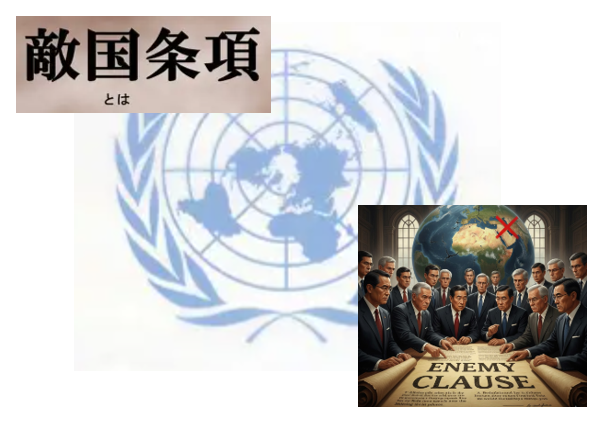
多くの日本人がその存在を知らない国連憲章の「敵国条項」と、一連の中国の動向について振り返ります。「敵国条項」(国連憲章第53条および第107条)は、第二次世界大戦の連合国が敗戦国(日本、ドイツ、イタリア、フィンランドなど)に対し、国連安全保障理事会(安保理)の承認なしに強制行動を取れると定めた条項です。
We will review the “enemy state clauses” of the United Nations Charter, which many Japanese people are unaware of, and a series of Chinese actions. The “enemy state clauses” (Articles 53 and 107 of the UN Charter) stipulate that the Allied Powers of World War II can take coercive action against defeated countries (Japan, Germany, Italy, Finland, etc.) without the approval of the UN Security Council.
この条項は、日本が1956年に国連に加盟し、主権平等の原則の下に立って以降、すでにその効力や存在意義を失っていると国際法上は解釈されています。小泉政権期以降、日本政府は「事実上死文化している」と対外的に発信しています。2005年には国連首脳会合において、国連憲章から「敵国」への言及を削除するとの全加盟国首脳の決意を規定した国連総会決議が採択されました。
This clause is interpreted under international law as having lost its validity and significance since Japan joined the United Nations in 1956 and stood on the principle of sovereign equality. Since the Koizumi administration, the Japanese government has stated externally that it is “virtually a dead letter.” In 2005, at the United Nations Summit, a UN General Assembly resolution was adopted stipulating the decision of all member state leaders to remove references to “enemy states” from the UN Charter.
特に1995年の国連総会決議では、中国自身を含む155カ国が、敵国条項が「現代の国際関係においていかなる法的意義も持たない」という結論に賛成票を投じています。しかし、2025年時点でも国連憲章改正には至っていません。すなわち、「敵国条項」は文字としてはっきりと国連憲章に残っているということです。この「文字」の存在が、中国が政治的圧力の「隠し玉」として利用する余地を残しました。
In particular, in the 1995 UN General Assembly resolution, 155 countries, including China itself, voted in favor of the conclusion that the enemy clauses “have no legal significance in modern international relations.” However, as of 2025, the UN Charter has not been amended. In other words, the “enemy clauses” remain explicitly in the UN Charter in writing. The existence of these “words” leaves room for China to use them as a “trump card” for political pressure.
中国大使館による条項への言及/Reference to the clause by the Chinese Embassy
在日中国大使館が突如、公式SNSに「中国は国連安全保障理事会の許可を必要とせず、日本に対して軍事行動を取る権利を有する」という内容を投稿しました。
The Chinese Embassy in Japan suddenly posted on its official SNS, stating that “China has the right to take military action against Japan without the permission of the United Nations Security Council.”
この投稿は、高市早苗首相が国会で、台湾有事の際に日本の存立が脅かされる「存立危機事態」に該当しうると発言したことが直接的な引き金とされています。中国は、日本が台湾防衛に関与し得るという姿勢に対し、強く動揺しました。
This post is directly triggered by Prime Minister Sanae Takaichi’s statement in the Diet that a contingency in Taiwan could constitute a “state of existential crisis” threatening Japan’s survival. China was deeply disturbed by Japan’s stance that it could be involved in the defense of Taiwan.
国際社会の反応と中国の「自滅行為」/The International Community’s Response and China’s “Self-Destructive Behavior”
今回の中国の主張は、国際法上の「自滅行為」であり、法的に重大な矛盾を抱えていると批判されました。アメリカ、EU、アジアの民主主義国家などが即座に日本支持を表明し、中国の行動を国際法秩序への挑戦として非難しました。日本政府が「冷静に、事実で応じる」という方針を貫いたことで、国際的な信頼を獲得しました。
This recent Chinese claim has been criticized as a “self-destructive act” under international law, fraught with significant legal contradictions. The United States, the EU, and Asian democracies immediately expressed their support for Japan, condemning China’s actions as a challenge to the international legal order. The Japanese government’s consistent policy of “responding calmly and with facts” has earned it international trust.
また、中国が日本への観光制限や水産物輸入の全面停止といった経済的圧力をかけた結果も、中国にとって皮肉な結果となりました。日本では、水産物価格が下落したことで国内消費が喚起されるなど、かえって日本経済への「景気刺激策」として機能しました。一方の中国では、資本流出や国内サプライチェーンの混乱を招き、自国経済が打撃を受けるという結果になりました。
Furthermore, the economic pressure China exerted on Japan, such as tourism restrictions and a complete halt to seafood imports, ironically backfired. In Japan, the decline in seafood prices stimulated domestic consumption, inadvertently acting as an economic stimulus. Conversely, China suffered capital outflow and domestic supply chain disruptions, damaging its own economy.
この一連の出来事を通じて、国際社会は「力と恐怖で支配する体制」ではなく、「法と信頼でつながる秩序」を選択しました。日本の「冷静なる決意」は、新しい外交モデルとして評価されています。現在、国際連合では、「敵国条項」の正式な削除に向けた動きも改めて進められています。
Throughout this series of events, the international community chose an “order connected by law and trust” rather than a “regime ruled by power and fear.” Japan’s “calm resolve” is being praised as a new model for diplomacy. Currently, within the United Nations, there is renewed momentum toward the formal removal of the “enemy state clauses.”
中国の外交的勝利宣言/China’s Declaration of Diplomatic Victory
2025年11月21日、中国共産党系の国際紙「環球時報」がある評論を公開しました。そのタイトルは「日本はすでに代償を払った」というものでした。この言葉がアッという間に中国のSNSを駆け巡りました。これは何を意味するのでしょうか。多くの中国の人々は「遂に日本が中国に屈したのか」と受け止めたのかも知れません。
On November 21, 2025, ”The Global Times”, an international newspaper affiliated with the Chinese Communist Party, published a commentary entitled “Japan Has Already Paid the Price.” This phrase quickly spread across Chinese social media. What does this mean? Many Chinese people may have interpreted it as “Japan has finally yielded to China.”
評論の中身は「中国の一連の対抗措置が、日本に大打撃を与え、高市首相は言動の撤回と退陣を迫られた」というものです。これは中国国民に対する「中国の外交的勝利宣言」です。もちろんこれは中国国内だけの「勝利宣言」で、当然、国際世論は高市政権の揺るがぬ強気の外交が圧勝したことは知っています。またまた世界のSNSは大騒ぎ。中国だけが知らない外の世界で、中国はますます滑稽な存在になってしまいました。
The content of the review is that “China’s series of countermeasures have dealt a heavy blow to Japan, and Prime Minister Takaichi has been forced to retract her words and resign.” This is a “declaration of China’s diplomatic victory” to the Chinese people. Of course, this is only a “victory declaration” within China, and naturally, international public opinion knows that the Takaichi administration’s unwavering, strong-willed diplomacy has won a landslide victory. Once again, the world’s social media is in an uproar. China is becoming an increasingly ridiculous presence in the outside world, which only China is unaware of.
何故、中国は国民向けに「勝利宣言」を出したのでしょうか。それは、外交的にこれ以上戦う手段が残されていなかったからです。しかしその弱みを国民に晒す訳にはいきません。中国共産党の強さと威厳を保つ必要があったのです。これら一連の出来事について、高市首相は何も語りませんでした。真の勝者は、静かに小さな勝利を積み重ね、圧倒的な勝利へと至るのです。
Why did China issue a “declaration of victory” to its people? It was because they had no diplomatic means left to fight. However, they could not expose this weakness to their people. It was necessary to maintain the strength and dignity of the Chinese Communist Party. Prime Minister Takaichi said nothing about these series of events. The true victor quietly accumulates small victories, leading to an overwhelming triumph.