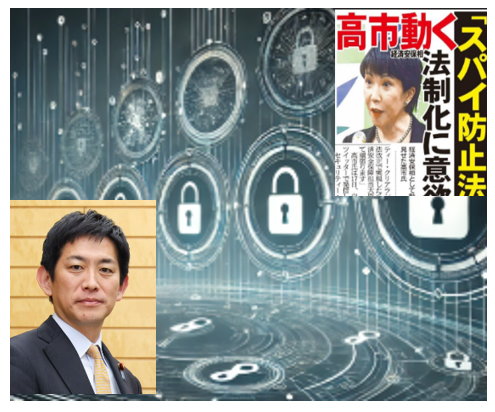
Policy Research Council Chairman Kobayashi
戦略的な「0から1」への突破口/Strategic breakthrough from zero to one
多くの先進国がスパイ防止法を有する中、日本はその不在により「スパイ天国」と揶揄され、機密情報の漏洩リスクや日米等の同盟国との信頼関係構築に支障をきたしてきました。この現状を打破すべく、高市政権と自民党・小林鷹之政調会長が進める新たな法整備の動きが注目されています。
While many developed countries have anti-espionage laws, Japan has been derisively called a “spy haven” due to their absence, leading to risks of leaked classified information and impediments to building trust with allies like the U.S. The movement towards new legislation being advanced by the Takaichi administration and LDP Policy Research Council Chairman Takayuki Kobayashi to break this status quo is drawing attention.
定義や人権論争で停滞しがちな「スパイ防止法」の完全な成立を待つのではなく、高市政権は、「外国代理人登録制度」を先行導入する方針です。これは、完璧な法整備を目指して足踏みするよりも、まずは実務的な第一歩(0を1にする)を確実に踏み出すための戦略的な「最強の布石」と位置づけられています。この制度は、すでに多くの先進国で導入されているものです。
Rather than waiting for the complete enactment of a “spy prevention law,” which tends to stall due to definitional and human rights debates, the Takaichi administration plans to introduce a “foreign agent registration system” first. This is positioned as a strategic and “strongest preparatory step” to reliably take a practical first step (turning 0 into 1), rather than marking time aiming for perfect legislation. This system has already been adopted in many developed countries.
米国の「外国代理人登録法」/The U.S. Foreign Agents Registration Act
米国のFARA(外国代理人登録法)は世界で最も古く、代表的な制度です。その成立は1938年でナチス・ドイツのプロパガンダに対抗するため制定されました。制度の内容は外国政府、政党、企業などの「代理人」として、米国内で政治活動や広報活動を行う者は、司法省への登録と活動報告が義務付けられています。
The United States’ Foreign Agents Registration Act (FARA) is the oldest and most representative system in the world. It was established in 1938 to counter Nazi German propaganda. The law requires individuals acting as “agents” of foreign governments, political parties, or corporations to register with the Department of Justice and report their activities if they engage in political or public relations activities within the United States.
特徴としては、敵国に限らず同盟国も対象であり、例えば日本の企業や政府が米国のロビイストを雇って自国に有利な政策を働きかける場合も登録が必要です。誰が、どの国の依頼で、いくら貰って、誰に働きかけたかがデータベースで一般公開されます。さらに、未登録や虚偽報告には、最大5年の禁錮刑や罰金が科されます。
A key characteristic is that it targets not only enemy nations but also allied nations. For example, registration is required even when Japanese companies or the government hire US lobbyists to promote policies favorable to their own country. Information on who is lobbying, at the request of which country, how much they are paid, and who they are lobbying is made publicly available in a database. Furthermore, unregistered activity or false reporting is subject to a maximum penalty of five years imprisonment and fines.
日本が検討しているのも、米国のような「透明化」を目的とした制度です。スパイ防止法が「情報を盗む人を捕まえる」法律であるのに対し、外国代理人登録制度は「合法的に見える工作活動のスポンサーを明らかにさせる」法律である点が異なります。
The system Japan is considering is also a system aimed at “transparency” like the United States. Unlike anti-espionage laws, which are laws to “catch people who steal information,” the foreign agent registration system differs in that it is a law to “reveal the sponsors of seemingly legitimate lobbying activities.”
新制度の狙い/Objectives of the New System
既存の「特定秘密保護法」では、情報漏洩後の処罰は可能でも、政治決定を歪める「影響力工作(政治家への接近、世論誘導、ロビー活動)」や漏洩を促す行為自体には対処できないという「穴(セキュリティホール)」がありました。本制度は、外国政府の指示や利益のために活動する人物に対し、身分と資金源の登録を義務付けるものです。これにより、「言論の自由」や「民間交流」を隠れ蓑にした工作活動を可視化し、未登録活動を違法とすることで、合法的にその正体を白日の下に晒すことを目的としています。
The existing “State Secrets Protection Law” has a “loophole (security hole)” in that it allows for punishment after information leaks, but cannot address “influence operations (approaching politicians, manipulating public opinion, lobbying)” that distort political decisions, or the act of encouraging leaks itself. This system requires individuals acting on the instructions or for the benefit of foreign governments to register their identity and source of funds. The aim is to visualize activities that use “freedom of speech” and “private exchange” as a cover, and to legally expose the true nature of unregistered activities by making them illegal.
このように、従来の法制度では対応が困難だった「見えない脅威」に対し、「外国代理人登録制度」は新たな抑止力として機能することが期待されています。国際社会においては、情報活動の透明性が国家間の信頼構築に不可欠とされており、日本もこの流れに歩調を合わせることで、同盟国との連携強化や、自国の政策決定の独立性を守る体制強化が可能となります。今後は制度設計の詳細や運用体制の構築が焦点となりますが、法の網をすり抜けていた影響工作への実効的な対策として、社会全体での理解と支持が求められるでしょう。
The “Foreign Agents Registration System” is expected to function as a new deterrent against “invisible threats” that were difficult to address with conventional legal systems. In the international community, transparency in information activities is essential for building trust between nations, and by aligning with this trend, Japan can strengthen cooperation with its allies and enhance its ability to protect the independence of its policy decisions. Going forward, the focus will be on the details of the system’s design and the establishment of operational structures. Effective measures against influence operations that have slipped through the cracks of the law will require understanding and support from society as a whole.
政界・反対派への影響/Impact on the Political Arena and Opposition
この動きに対し、これまで「独自の外交パイプ」として外国勢力への利益誘導を行ってきた親中派議員や一部メディアが強く反発しています。彼らは「監視社会になる」と批判しますが、推進側はこれに対し「困るのはスパイだけであり、一般国民には関係ない」「国民が監視されるのではなく、国民が外国勢力を監視するための制度である」と反論しています。反対派が声を上げるほど、その正体が炙り出される「答え合わせ」が進むと見られています。
In response to this movement, pro-China lawmakers and some media outlets, who have been guiding foreign powers for profit as their “own diplomatic pipeline,” are strongly opposed. They criticize it as “becoming a surveillance society,” but the proponents counter that “only spies will be troubled, and it has nothing to do with the general public,” and “it is a system for the people to monitor foreign powers, not for the people to be monitored.” It is believed that the more the opposition raises its voice, the more the “answer confirmation” of revealing their true identity will progress.
この状況は、あたかも暗闇に潜む者が光を浴びて狼狽するかのようです。これまで水面下で蠢いていたものが、白日の下に晒されることへの恐れ。それは、彼らがこれまで甘い汁を吸ってきた構造が崩れ去る危機感の表れでしょう。推進派の主張は明快です。国民の安全を守り、外国勢力による不当な干渉を排除する。これは、主権国家として当然の権利であり、義務でもあります。
This situation is as if someone lurking in the darkness is thrown into the light and thrown into confusion. It’s a fear of having what has been stirring beneath the surface exposed to the light of day. This is likely an expression of the sense of crisis that the structure from which they have been benefiting will collapse. The proponents’ argument is clear: to protect the safety of the people and to eliminate unfair interference by foreign powers. This is both a natural right and an obligation as a sovereign state.
反対派の「監視社会」というレッテル貼りは、論点をすり替え、国民の不安を煽るための常套手段に過ぎません。真に憂慮すべきは、監視社会ではなく、外国勢力によって蝕まれる国家の危機です。今回の動きは、日本の独立と安全保障を取り戻すための重要な一歩となるでしょう。反対派の抵抗は激しいでしょうが、その声が大きければ大きいほど、彼らの背後にあるものが明確になり、国民の覚醒を促すことになるでしょう。まさに、「答え合わせ」は加速の一途を辿るのです。
The opposition’s label of “surveillance society” is nothing more than a common tactic to divert the issue and incite public anxiety. What we should truly be concerned about is not a surveillance society, but the crisis of a nation being eroded by foreign powers. This move will be an important step towards regaining Japan’s independence and security. The opposition’s resistance will be fierce, but the louder their voices, the clearer what lies behind them will become, prompting national awakening. Indeed, the “answer confirmation” is accelerating.
攻めの公安体制へ/Toward a Proactive Public Security System
政府は2026年の法案提出を視野に入れており、さらにその先には、2027年度末を目処とした「対外情報庁(日本版CIA)」のような専門機関の創設も計画されています。これにより、従来の事後処理的な対応から、能動的に情報を収集・特定する「攻めの公安体制」への転換を目指しています。
The government is considering submitting a bill in 2026, with further plans to establish a specialized agency similar to the “External Intelligence Agency (Japanese version of the CIA)” by the end of fiscal year 2027. This aims to shift from a reactive, post-incident approach to a proactive “offensive public safety system” that actively collects and identifies information.
今回の方針は、長年「鍵のかかっていない家」状態だった日本のセキュリティを強化し、普通の国へと脱皮するための歴史的転換点と評価されています。抵抗勢力の反発も予想されますが、国益を守る不可欠な改革として強い支持が呼びかけられています。
This policy is being hailed as a historic turning point for Japan, one that strengthens its long-vulnerable security and allows it to evolve into a normal nation. While resistance from opposing forces is anticipated, strong support is being urged for this essential reform to protect national interests.