あるネット上の動画に、ドイツ人の建築家が都会から離れた、日本の古い旅館に宿泊体験した様子が描かれていました。ドイツ人建築家のマックス氏と、日本の旅館の初老の女将であるアキさんとの交流を通じて、技術と効率性だけではない、人の心に寄り添う日本の「真心」に目覚める物語として描いてみました。
A video online depicted a German architect’s experience staying at an old Japanese inn. Through the interaction between Max, the German architect, and Aki, the elderly female owner of the Japanese inn, it was portrayed as a story of awakening to the Japanese “sincerity” that embraces people’s hearts, not just technology and efficiency.
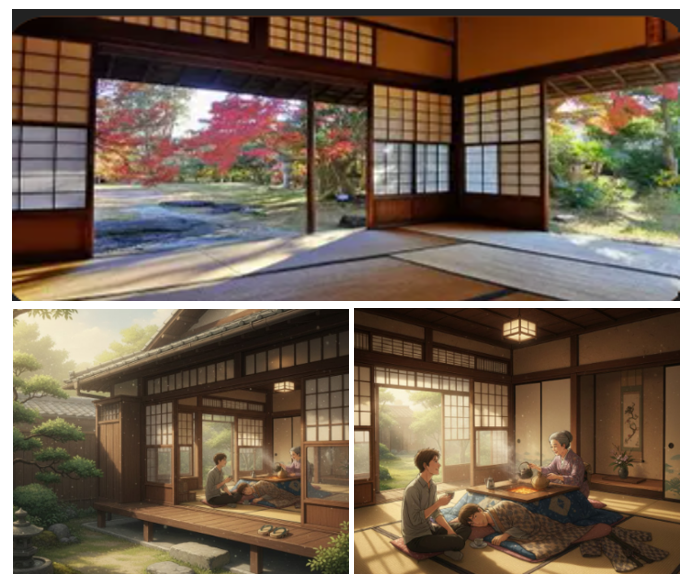
- ドイツ人建築家の発見/The Discovery of a German Architect
- 炬燵(こたつ)が溶かす、冬の朝の冷たさ/The kotatsu melts away the cold of winter mornings
- 障子と風が織りなす、自然との対話/The dialogue with nature woven by shoji and wind
- 真心に触れた夜/A Night Touched by Sincerity
- 日本家屋:学びと新たな決意/Japanese House: Learning and New Resolutions
- 天然素材の活用/Utilization of Natural Materials
- 空間と構造:集中力と心の安定/Space and Structure: Focus and Mental Stability
ドイツ人建築家の発見/The Discovery of a German Architect
マックス・シュルツは、欧州の最新技術を学んだ気鋭の建築家でした。彼の信念は、高気密・高断熱、分厚い壁、そして完璧なエネルギー効率。家とは、外部の自然から人を守り、完全に分離する要塞であるべきだと考えていました。そんな彼が、日本の伝統的な家屋を動画で見たときの最初の感想は、「疑問」と「驚愕」でした。
Max Schultz was an up-and-coming architect who had studied the latest technology in Europe. His belief was in high airtightness and insulation, thick walls, and perfect energy efficiency. He believed that a house should be a fortress that protects people from the outside world and completely isolates them. So, when he saw a video of a traditional Japanese house, his first impressions were “doubt” and “astonishment.”
「壁が薄く、断熱材もない?信じられない!ここは人が住むところではない。あまりにも非科学的だ。」彼は、日本の建築からは何も学ぶことはない、と頑なに決めつけていました。開放的な日本の住居と比べ、西洋人の住居は生活を守るシェルターに近い存在と言えます。
Walls so thin, and no insulation? Unbelievable! This isn’t fit for human habitation. It’s utterly unscientific. He was adamant that there was nothing to be learned from Japanese architecture. Compared to open Japanese houses, Western homes are more like shelters to protect life.
炬燵(こたつ)が溶かす、冬の朝の冷たさ/The kotatsu melts away the cold of winter mornings
しかし、日本の古い旅館に滞在したマックス氏の人生観は、一変します。冬の早朝、廊下の鋭い寒さに震えながら部屋に戻った彼に、女将のアキさんは、そっと声をかけました。「マックス様、寒いでしょう。どうぞ、こちらへ。」アキさんが彼を招き入れたのは、日本の伝統的な暖房器具、炬燵でした。
However, Mr. Max’s outlook on life completely changed after staying at an old Japanese inn. One early winter morning, as he returned to his room shivering from the sharp cold in the hallway, the landlady, Aki, quietly called out to him, “Mr. Max, you must be cold. Please, come this way.” Aki invited him to sit at a kotatsu, a traditional Japanese heating device.
当初、「足元だけを温めるなんて、中途半端だ」と不満顔だったマックス氏。しかし、炬燵に脚を入れているうちに、じんわりとした温もりが下半身から全身へと広がり、いつしか心地よさに身を委ね、うとうとと横になっていました。さらに、アキさんが差し出してくれた丹前(たんぜん)を羽織ると、熱効率の良さに驚きました。
Initially, Mr. Max was dissatisfied, saying, “Warming only the feet is half-hearted.” However, as he sat with his legs in the kotatsu, a gentle warmth spread from his lower body to his entire body, and before he knew it, he surrendered to the comfort and dozed off. Furthermore, when Aki handed him a tanzen (a padded kimono), he was surprised by its excellent heat efficiency.
「頭はひんやりと覚醒しているのに、身体は芯から温まっている。これは、最小限のエネルギーで最大限の安らぎを生む、経済的で賢明な暖房ではないか。」科学的な効率性ばかりを追求してきたマックス氏の胸に、初めて「心地よさ」という感覚が深く響きました。
My head is cool and refreshed, yet my body is warmed to the core. Isn’t this an economical and sensible form of heating, creating maximum comfort with minimum energy? For the first time, the sensation of “comfort” resonated deeply within Mr. Max, who had only pursued scientific efficiency.
障子と風が織りなす、自然との対話/The dialogue with nature woven by shoji and wind
翌朝、マックス氏の視線は、もはや批判的ではありませんでした。朝日が差し込む瞬間、障子を通った光は、まるで魔法のように強さを失い、部屋全体を驚くほど柔らかく、均一な光で満たしていました。「紙だけで、光をこれほどまでに美しく、やさしく操れるのか…!」彼は和紙の神秘性に感動します。
The next morning, Mr. Max’s gaze was no longer critical. At the moment the morning sun streamed in, the light passing through the shoji screen lost its intensity as if by magic, filling the entire room with a surprisingly soft, uniform light. “To think that paper alone could control light so beautifully, so gently…!” He was moved by the mystique of the Japanese paper.
そして、引き戸と窓をサッと開けた瞬間、部屋全体を一気に風が吹き抜ける爽快感に息を飲みました。壁が少ないからこそ実現する、この完璧な換気のしやすさ。彼は「家が、自然の息吹と一体化している」と感じました。
And the moment I quickly opened the sliding door and window, I was breathless at the exhilarating feeling of the wind blowing through the entire room. This perfect ease of ventilation is only possible because there are so few walls. He felt that the house was integrated with the breath of nature.
その晩、マックス氏は、静寂の中に響く障子越しの風音や、畳の柔らかな感触、そして木の香りに心を委ねながら、これまで感じたことのない安堵と充足感に包まれていました。彼は、欧州で学んだ「遮断」と「制御」を重視した住まいとは対照的に、日本家屋が「自然との対話」と「心のゆとり」を生み出していることに気づきます。家は単なるシェルターではなく、移ろう光や風、季節の気配を受け入れる「生きた空間」なのだと、深く理解したのです。
That night, Mr. Max surrendered himself to the sounds of the wind beyond the shoji screens echoing in the silence, the soft feel of the tatami mats, and the scent of wood, enveloped in a sense of peace and fulfillment he had never felt before. In contrast to the dwellings focused on “isolation” and “control” that he had learned about in Europe, he realized that the Japanese house created a “dialogue with nature” and “mental space.” He deeply understood that a house is not just a shelter, but a “living space” that accepts the changing light, wind, and signs of the seasons.
真心に触れた夜/A Night Touched by Sincerity
温泉に入り、食事を終え、マック氏は木造家屋の構造を見て回り、隅々の写真を撮ったりレポートをまとめていました。彼はすでに、日本家屋に秘められた知恵や技術に魅了されていました。
Having taken a hot spring bath and finished his meal, Mr. Mack wandered around looking at the structure of the wooden house, taking photos of every corner and compiling a report. He was already fascinated by the wisdom and techniques hidden within Japanese houses.
一日が終わり、布団に入る前。アキさんは、湯気の立つ温かいお湯が入った湯たんぽをマックス氏に差し出し、にこやかに言いました。「暖かく眠れますよ。おやすみなさいませ。」最新技術によって完璧に温度管理された生活を信じていたマックス氏にとって、初めての湯たんぽ。その素朴で優しいぬくもりは、冷たい布団を温めるだけでなく、彼の頑なだった心の奥底まで、じんわりと溶かしてくれました。
The day ends, and before getting into bed, Aki hands Max a hot water bottle filled with steaming water, saying with a smile, “This will keep you warm while you sleep. Good night.” For Max, who believed in a life perfectly temperature-controlled by the latest technology, this was his first hot water bottle. Its simple and gentle warmth not only warmed the cold bedding but also gradually melted away the depths of his stubborn heart.
その晩、マックス氏は悟りました。日本の家屋の知恵は、「光の制御」「風の流れ」「空間の可変性」といった、自然との調和を重視している。そして、「技術の完璧さ」よりも、「人への真心のこもった配慮」が、真の安らぎを生み出しているのだと。彼は、湯たんぽや炬燵に象徴される、自然に溶け込むサスティナブル(持続可能)な考え方こそが、未来の建築に不可欠だと確信しました。
That night, Mr. Max realized that the wisdom of Japanese houses lies in their emphasis on harmony with nature through “light control,” “air flow,” and “spatial variability.” He also understood that “sincere consideration for people,” rather than “technical perfection,” creates true peace of mind. He became convinced that sustainable approaches that blend in with nature, as symbolized by hot water bottles and kotatsu, are essential for the architecture of the future.
日本家屋:学びと新たな決意/Japanese House: Learning and New Resolutions
翌朝、マックス氏はアキさんに深く深く頭を下げました。「アキさん、ありがとうございます。この数日の経験は、僕の建築家人生の出発点になります。」彼の目に、確かな光が宿っていました。「僕はこれから、人により添う日本の『真心』をリスペクトした、自分らしい設計をしていきます。もう、技術の奴隷にはならない。」
The next morning, Mr. Max bowed deeply to Aki. “Aki, thank you very much. These past few days have been the starting point of my career as an architect.” A definite light dwelled in his eyes. “From now on, I will create my own designs, respecting the Japanese ‘sincerity’ that is close to people. I will no longer be a slave to technology.”
最新技術を極めた建築家は、日本の古い旅館で、最も大切なことを学びました。それは、家が提供すべきは「効率」ではなく、「安らぎ」と「心」であるということ。そして、日本の家屋は、素材や構造が持つ「心地よさ」を通じて、私たちの心の健康をそっとサポートしている、という深い真実でした。
An architect who mastered the latest technology learned the most important thing at an old Japanese inn. That is, what a house should provide is not “efficiency” but “peace” and “heart.” And the profound truth that Japanese houses subtly support our mental health through the “comfort” of their materials and structure.
マックス氏の新たな決意は、静かに、しかし力強く彼の日常へと溶け込んでいきました。彼は旅館での体験を胸に、自然の力や人の温もりを尊重した設計思想へと歩みを進めます。日本家屋が教えてくれた「心のゆとり」と「自然との調和」の価値を、これからの建築にどう生かすか、その問いが彼の原動力となりました。
Max’s new resolve quietly but powerfully integrated into his daily life. Cherishing his experience at the traditional Japanese inn, he moved forward with a design philosophy that respected the power of nature and the warmth of people. The question of how to utilize the values of “emotional comfort” and “harmony with nature” that Japanese houses had taught him in future architecture became his driving force.
障子越しの柔らかな光、畳の感触、そして人の真心がもたらす安らぎを、彼は自らの手で新しい空間へと紡いでいくのです。欧米的な閉ざされた構造や効率性を見直し、もっと人の心に寄り添う住まいを目指して。その決意は、やがて彼自身の建築家としての人生を大きく変えていくことでしょう。
He weaves the soft light filtering through shoji screens, the feel of tatami mats, and the peace of mind brought about by human sincerity into a new space with his own hands. Rethinking Western-style closed structures and efficiency, he aims for a home that is more in tune with the human heart. This determination will eventually greatly change his own life as an architect.
天然素材の活用/Utilization of Natural Materials
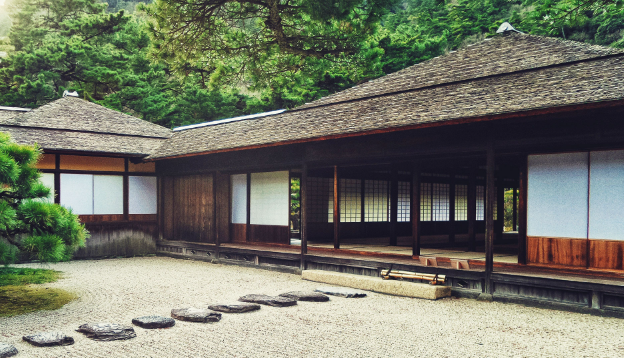
日本の家屋、特に伝統的な要素を取り入れた空間には、欧米の家屋とは異なる側面から精神的なリラックス効果や集中力向上効果が期待できると言われています。
Japanese houses, especially spaces incorporating traditional elements, are said to offer spiritual relaxation and enhanced concentration benefits from perspectives different from those of Western houses.
欧米の家屋が壁や断熱材などで外部と完全に遮断し、人工的に快適な環境を作り出すことを重視するのに対し、日本の家屋は自然の要素を取り込み、それと調和することで心身の健康を保つという考え方が反映されています。日本の家屋がもたらす主な心理的効果は、天然素材の活用と、生活空間の構造から生まれています。
While Western homes prioritize complete isolation from the outside through walls and insulation to artificially create a comfortable environment, Japanese homes reflect the idea of maintaining mental and physical health by incorporating natural elements and harmonizing with them. The main psychological effects of Japanese houses stem from the use of natural materials and the structure of the living space.
日本の家屋は、木材、畳(い草)、障子(和紙)といった天然素材が豊富に使われています。木材には、リラックス効果を高め、心地よさを感じさせる効果があるとされています。日本の家屋では、構造材だけでなく内装にも木材が多用されています。木の温もりと香りとともに、視覚的・触覚的な安らぎをもたらします。
Japanese houses make abundant use of natural materials such as wood, tatami mats (igusa rush), and shoji screens (washi paper). Wood is said to have the effect of enhancing relaxation and creating a comfortable atmosphere. In Japanese houses, wood is used extensively not only for structural materials but also for interior decoration. Along with the warmth and fragrance of wood, it brings visual and tactile comfort.
畳の原料である「い草」には、森林浴のような鎮静作用をもたらす芳香成分(フィトンチッドなど)が含まれており、ストレス軽減や心の安定を促します。畳の柔らかな感触や適度な弾力性は、フローリングとは異なり、座ったり寝転んだりといった日本独特の生活様式を促し、心身のバランスを整える効果があります。
“Igusa,” the material used for tatami mats, contains aromatic components (such as phytoncides) that have a calming effect similar to forest bathing, reducing stress and promoting mental stability. Unlike flooring, the soft texture and moderate elasticity of tatami mats encourage a uniquely Japanese lifestyle of sitting and lying down, which has the effect of harmonizing the mind and body.
障子に使われる和紙は、外からの直射日光を拡散し、部屋全体に柔らかく、均一な光を届けます。この光は、強い光による刺激を和らげ、心を落ち着かせる効果があるとされます。
The Japanese paper used in shoji screens diffuses direct sunlight from the outside, delivering soft, uniform light throughout the room. This light is said to have a calming effect on the mind by reducing the stimulation of strong light.
空間と構造:集中力と心の安定/Space and Structure: Focus and Mental Stability
シンプルで可変性のある空間デザインが、精神的な効果をもたらします。シンプルなデザインは「禅の思想」から由来するものと言われています。日本の伝統的な和室は、装飾を極力排したシンプルで無駄のないデザインが特徴です。これは、心の雑念を取り除き、静寂と落ち着きを促す効果があり、瞑想や茶道といった精神的な行いとも親和性が高いです。
Simple and flexible spatial design has a mental effect. It is said that simple design originates from the “Zen philosophy.” The traditional Japanese-style room is characterized by a simple and uncluttered design that eliminates decoration as much as possible. This has the effect of removing distractions from the mind, promoting silence and tranquility, and is highly compatible with spiritual practices such as meditation and tea ceremony.
日本の家屋は集中力の向上と自然との調和を目指すものです。畳の部屋で学習や作業を行った場合、フローリングの部屋よりも解答数や正解率が高くなるという実験結果も報告されており、「い草」の香りと落ち着いた色彩が「集中力の持続」につながると考えられています。
Japanese houses aim to improve concentration and harmonize with nature. Experimental results have shown that when learning or working in a tatami room, the number of answers and the accuracy rate are higher than in a room with flooring, and it is believed that the scent of “igusa” (rush grass) and the calm colors lead to “sustained concentration.”
また縁側は広くとられた開口部を通じて、室内と室外が緩やかにつながります。これにより、自然のリズム(光、風、季節)を身近に感じやすく、現代社会で失われがちな自然とのつながりが精神的なリフレッシュや幸福感の向上につながるとされています。
Additionally, the veranda is connected to the interior and exterior through a wide opening. This makes it easier to feel the rhythm of nature (light, wind, seasons), and it is said that this connection with nature, which tends to be lost in modern society, leads to mental refreshment and improved well-being.
日本の家屋は、素材や構造が持つ「心地よさ」を通じて、利用者の心の健康をサポートする要素が多いと言えるでしょう。
Japanese houses can be said to have many elements that support the mental well-being of users through the “comfort” of their materials and structure.