以前の記事「フランス人学者が見つけた日本の『道』」でご紹介したクロード・レヴィ=ストロースの「世界地図の中心は西洋ではなく極東の島国だった」という言葉は、非常に印象的でした。彼がこの言葉を述べてから40年以上が経過した今、世界の中心はどのように変化したのでしょうか。
The quote from Claude Lévi-Strauss in the previous article, “The ‘Way’ of Japan Discovered by a French Scholar,” stating that “the center of the world was not the West, but the island nation of the Far East,” was very impressive. Now that more than 40 years have passed since he made this statement, how has the center of the world changed?
揺らぐ世界経済/Shaky Global Economy
2025年、米国でトランプ大統領が再び政権を握り、「アメリカ・ファースト」そして「偉大な国アメリカを取り戻す(Make America Great Again)」をスローガンに掲げ、新政権が発足しました。彼の行動は迅速で、次々と新たな法案を成立させ、改革を推し進めました。ディープステートの解体や、巨額な国家予算の不透明な使用などを厳しく糾弾し、米国のみならず世界中から注目を浴びました。
In 2025, Donald Trump regained the presidency in the United States, and a new administration was launched with the slogans “America First” and “Make America Great Again.” His actions were swift, and he enacted new bills and pushed forward reforms one after another. He severely criticized the dismantling of the deep state and the opaque use of huge national budgets, attracting attention not only from the United States but from all over the world.
この半年間、多くの人々はやはり「世界地図の中心」は米国であると認識していました。しかし、トランプ関税が発表されると、世界の経済は大きく揺らぐことになります。トランプ関税の当初の目的は、世界のサプライチェーンから中国を排除することでしたが、中国だけでなく、米国の多くの同盟国にも大きな影響を与えました。
For the past six months, many people have still recognized the United States as the “center of the world map.” However, the announcement of Trump’s tariffs will greatly shake the world economy. The initial goal of Trump’s tariffs was to exclude China from the global supply chain, but it had a major impact not only on China but also on many of the United States’ allies.
まず、最大の同盟国である隣国カナダが、米国との貿易の見直しに着手しました。さらに、EUの中心国であるドイツも米国との流通の全面的な改革を検討し始めました。加えて、サウジアラビヤやアラブ首長国連邦も、従来の石油のドル決済(ペトロダラー体制)からの転換を進めています。これらの影響力を持つ国々の動きは、周辺国にも波及し、結果的に米国が孤立する状況が生まれつつあります。
First, Canada, its largest ally and neighbor, has begun reviewing its trade relationship with the United States. Furthermore, Germany, a core country of the EU, has also started considering a complete overhaul of its trade with the US. In addition, Saudi Arabia and the United Arab Emirates are moving away from the traditional dollar-based oil transactions (the petrodollar system). These influential countries’ actions are spreading to neighboring countries, creating a situation where the United States is becoming isolated.
貴重な資源/Valuable resources
もちろん、トランプ関税は日本にも大きな影響を与えています。しかし、日本の政治は石破首相の進退問題で揺れており、国際的には目立った動きが見られません。
Of course, the Trump tariffs are also having a major impact on Japan. However, Japanese politics are in turmoil over the question of Prime Minister Ishiba’s future, and internationally, there is no notable activity.
地政学的なパワーバランスでは、米国、中国、ロシア、そして欧州連合が、軍事力や経済力を背景に派手なパフォーマンスで覇権拡大を狙っています。それらと比較すると、日本は声高に自らの主張をすることもなく、粛々と「我が道を行く」というスタンスを保っています。
In the geopolitical balance of power, the United States, China, Russia, and the European Union are aiming to expand their hegemony with flamboyant performances, backed by military and economic power. Compared to them, Japan maintains a stance of quietly “going its own way” without assertively proclaiming its own.
このような日本の政治姿勢は、一見すると無作為、あるいは無能に見えるかもしれません。確かに、日本の政治が国際的に大きな役割を果たしていないように見えるのも事実です。実際、世界が日本の政治を見る目も、あまり期待をしていないように思えます。
This kind of Japanese political stance may appear random or incompetent at first glance. It is certainly true that Japanese politics do not seem to be playing a major role internationally. In fact, the world’s view of Japanese politics does not seem to hold much expectation either.
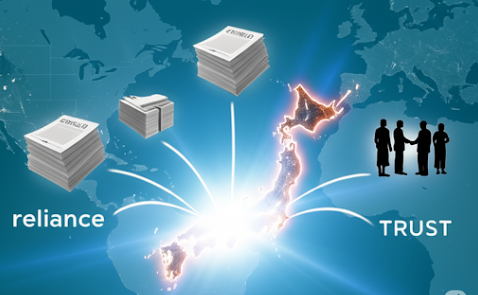
確かに、日本は資源の少ない国であり、東アジアの片隅に静かに存在する小さな国です。しかし、米国、中国、ロシア、EUが失いつつある、貴重な資源が日本にだけあることに世界中が気づき始めています。その貴重な資源とは、まさに「信用と信頼」です。
Certainly, Japan is a country with few resources, a small nation quietly existing in a corner of East Asia. However, the world is beginning to realize that Japan alone possesses a precious resource that the United States, China, Russia, and the EU are losing: that precious resource is precisely “Trust and reliance.”
「信用と信頼」とは?/What are “Trust and reliance”?
「信用と信頼」とは、高品質な工業製品、素材、技術。そして、安定性や透明性。さらに、道徳的な正直さ、誠実さ、公平性、優しさなどを指します。これらは一体どこに存在するのでしょうか。それらは、一般の日本人の中、そして全国に散在する多くの中小企業の中に存在しているのです。
Trust and reliance refer to high-quality industrial products, materials, and technology, as well as stability and transparency. Furthermore, they refer to moral honesty, integrity, fairness, and kindness. Where do these qualities exist? They exist within the average Japanese person and within the many small and medium-sized enterprises scattered throughout the country.
米国のトランプ関税以降、さまざまな世界基準が日本に集まり始めています。それはAI技術の倫理的基準、クラウドサービスの適正化規準、さらに海運などの流通網の安全基準。その他、農業、医療、食料など、多くの分野の安全基準が日本の高水準に準拠しようとしています。別の言い方をすれば、これらのルールを管理するのは日本ということになります。ルール作りの意味では、米国も欧州も中心的な役割を終えようとしているのです。
Since the Trump tariffs in the United States, various global standards have begun to converge in Japan. This includes ethical standards for AI technology, appropriate standards for cloud services, and safety standards for distribution networks such as maritime transport. In addition, safety standards in many fields such as agriculture, healthcare, and food are trying to comply with Japan’s high standards. In other words, Japan will be managing these rules. In terms of rule-making, the United States and Europe are about to finish their central roles.
「信用」を築くには実績と長い時間が必要です。そして「信頼」とは、「高く評価して」全てを任せられるという意味です。どうでしょうか、「信用と信頼」という視点で世界を眺めると、レヴィ=ストロースの「世界地図の中心は西洋ではなく極東の島国だった」という言葉は、ますます現実味を帯びてきたのではないでしょうか。
Building “trust” requires (achievements) and a long period. And “reliance” means that you “highly value” someone and can entrust everything to them. What do you think? When you look at the world from the perspective of “trust and reliance,” doesn’t Lévi-Strauss’s statement, “The center of the world map was not the West, but the island nation of the Far East,” seem increasingly realistic?