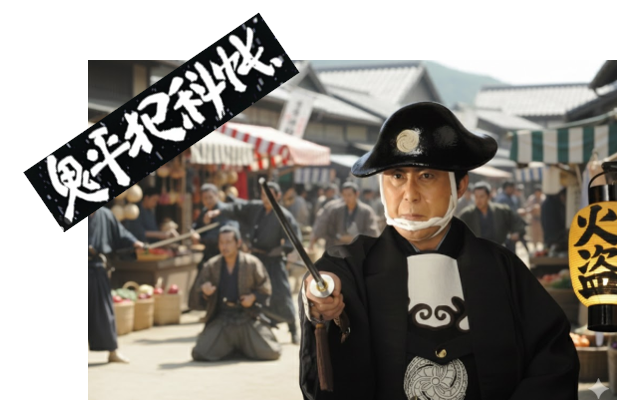
- 「鬼平」の意外な青年時代/The Unexpected Youth of “Onihei”
- 「火付盗賊改」としての活躍/His exploits as a fire-and-thief investigator
- 社会福祉の先駆け「人足寄場(にんそくよせば)」/Pioneer of Social Welfare: “Laborers’ Resting Place”
- 庶民からの絶大な人気と、武士階級からの反発/Overwhelming popularity among the common people and opposition from the samurai class
- 鬼平が遺したもの/What Onihei Left Behind
「鬼平」の意外な青年時代/The Unexpected Youth of “Onihei”
時代劇「鬼平犯科帳」のモデルとして知られる長谷川平蔵(宣以:のぶため)は、1745年に400石の旗本・長谷川宣雄の長男として誕生しました。長谷川家は代々「平蔵」を名乗る家系であり、彼もまた父の跡を継いでその名を名乗ることになります。
Hasegawa Heizo (Nobutame), known as the model for the historical drama “Onihei Hankachō,” was born in 1745 as the eldest son of Hasegawa Nobuo, a hatamoto with an income of 400 koku. The Hasegawa family had traditionally used the name “Heizo,” and he too would succeed his father and take that name.
若き日の宣以は、後の「鬼の平蔵」からは想像もつかないほど荒れた生活を送っていました。「本所の銕(てつ)」と呼ばれた彼は、放蕩の限りを尽くす不良旗本として近所でも有名で、遊郭に通い詰め、無頼の徒と交わる日々を過ごします。しかし、この時期に裏社会の力学や人間の機微を肌で感じた経験が、後の鋭い犯罪捜査に大きく活かされることとなりました。
In his youth, Sen’i led a life of such debauchery it was unimaginable compared to the later “Demon Heizo.” Known as “Tetsu of Honjo,” he was notorious in the neighborhood as a dissolute samurai who indulged in every excess, spending his days frequenting pleasure quarters and associating with rogues. However, the experiences he gained during this period—gaining firsthand understanding of the underworld’s dynamics and human subtleties—would prove invaluable in his later, incisive criminal investigations.
「火付盗賊改」としての活躍/His exploits as a fire-and-thief investigator
41歳の時、平蔵は「火付盗賊改(ひつけとうぞくあらため)」の長に抜擢されます。これは放火・強盗・博打などを取り締まる、現代で言えば「凶悪犯罪担当の特殊捜査機関」のトップです。
At age 41, Heizo was appointed head of ”The Fire and Robbery Investigation Unit”. This was the top position in an agency responsible for cracking down on arson, robbery, gambling, and similar crimes—the equivalent of a modern “Special investigative unit for violent crimes.”
彼は、関東一円を荒らし回った大盗賊・神道(じんどう)徳次郎の凶悪犯罪組織や、凶悪犯「葵小僧」を次々と捕縛するなどの功績を挙げました。平蔵の手法は独特でした。当時は拷問による自白強要が一般的でしたが、彼は犯罪者の心理を巧みに突き、自ら口を割らせる手法を得意としました。「蛇の道は蛇」を地で行く、元不良ならではの洞察力が光ったのです。
He achieved notable accomplishments, such as capturing the notorious criminal organization led by Jindō Tokujirō, a great bandit who terrorized the entire Kantō region, and apprehending the vicious criminal “Aoi Kozō” one after another. Heizo’s methods were unique. While forcing confessions through torture was common practice at the time, he excelled at skillfully probing the criminal’s psyche to make them talk of their own accord. His insight, honed by his own troubled past, truly embodied the saying “a snake knows a snake’s way.”
社会福祉の先駆け「人足寄場(にんそくよせば)」/Pioneer of Social Welfare: “Laborers’ Resting Place”
平蔵は単に罪人を捕まえるだけでなく、犯罪を生む「貧困」という根本原因に目を向けました。当時は飢饉により職を失った「無宿人(むしゅくにん)」が増え、生きるために犯罪に手を染める悪循環が起きていました。そこで彼は1790年、江戸・石川島に「人足寄場」を建設します。これは罪を犯した者や無宿人に大工や塗り物などの技能を習得させ、社会復帰を支援する、世界的に見ても極めて先駆的な更生施設でした。
Heizo focused not merely on apprehending criminals, but on the root cause of crime: poverty. At the time, famine had increased the number of jobless vagrants, creating a vicious cycle where people turned to crime to survive. In response, he established the “Laborers’ Shelter” in Edo’s Ishikawajima district in 1790. This rehabilitation facility, which taught skills like carpentry and lacquer work to criminals and vagrants to aid their reintegration into society, was exceptionally pioneering even by global standards.
しかし、幕府にはその運営資金を出す余裕がありませんでした。平蔵はあきらめず、なんと幕府から預かった公金を銭相場(投資)で運用し、その利益を運営費に充てるという、旗本としては前代未聞の手段で理想を実現させたのです。
However, the shogunate lacked the funds to cover its operational expenses. Heizo refused to give up. He achieved his ideal through an unprecedented measure for a hatamoto: he invested the public funds entrusted to him by the shogunate in the money market and used the profits to cover the operational costs.
庶民からの絶大な人気と、武士階級からの反発/Overwhelming popularity among the common people and opposition from the samurai class
平蔵は情に厚い人物でもありました。捜査に協力した町人に蕎麦を振る舞ったり、冤罪で拘留した者には自費で手当てを出して謝罪したりと、身分を問わず公平に接しました。その姿勢は江戸の庶民から絶大な信頼を得、「今大岡(名奉行の再来)」とまで称えられます。これは平蔵が、大岡越前守または大岡越前守忠相公として知られている名奉行と並び称されたという意味です。
Heizo was also a deeply compassionate man. He treated townspeople who assisted in investigations to soba noodles, and personally paid for medical care and apologized to those wrongfully detained. He treated everyone fairly, regardless of status. This attitude earned him immense trust from the common people of Edo, who even hailed him as “the modern Ōoka” (a reincarnation of the famous magistrate). This meant Heizo was regarded as equal to the renowned magistrate known as Ōoka Echizen-no-kami or Lord Ōoka Echizen-no-kami Tadasuke.
一方で、その型破りな行動は、保守的な武士階級からは激しい反発や嫉妬を買い、「山師(詐欺師)」などと誹謗中傷されることもありました。結局、平蔵は念願だった「町奉行」への出世は叶いませんでしたが、彼を支えたのは「庶民の協力」という目に見えない大きな力でした。その結果、江戸の治安は劇的に改善されたのです。
On the other hand, his unconventional actions drew fierce opposition and jealousy from the conservative samurai class, who slandered him as a “con artist” and worse. Ultimately, Heizo never achieved his long-held ambition of becoming a town magistrate. Yet what sustained him was the immense, invisible force of “the common people’s cooperation.” As a result, Edo’s public safety improved dramatically.
鬼平が遺したもの/What Onihei Left Behind
1795年、平蔵は50歳でその生涯を閉じました。将軍から見舞いの薬を贈られるほどの功績を残しながらも、過酷な激務がその寿命を縮めたと言われています。
In 1795, Heizō passed away at the age of 50. Though his achievements were so great that the shogun sent him medicine as a gift, it is said that his grueling workload shortened his life.
彼の死後、その住居跡には、後に「遠山の金さん」として親しまれる遠山景元(金四郎)が住むことになります。時代を象徴する二人の名奉行が同じ場所に縁を持ったことは、歴史の不思議な巡り合わせを感じさせます。
After his death, the residence was later occupied by Toyama Kagemoto (Kinshiro), who would become known as “Toyama’s Kinsan.” That two renowned magistrates, each emblematic of their era, were connected to the same place evokes a sense of history’s mysterious twists of fate.
長谷川平蔵の物語は、政治の質がそれを担う人間の「人徳」や「現場認識」に大きく左右されることを教えてくれます。権威に寄らず、常に庶民の立場に寄り添った彼の精神は、現代における「真の政治のあり方」を今もなお問い続けています。
The story of Heizo Hasegawa teaches us that the quality of politics is greatly influenced by the “personal integrity” and “on-the-ground perspective” of those who carry it out. His spirit, which never relied on authority but always stood alongside the common people, continues to challenge us today about the “true nature of politics.”