自分の出自、愛する家族、そして信頼を寄せる近所の人々との関係—–そのすべては、名前があってこそ意味を持ちます。もし人間に名前がなかったらどうなるでしょうか? 存在そのものが否定されたも同然です。しかし現代社会においても、そのような非人間的な行為がまかり通っている場所があります。私たちはその実態を見過ごすことができるでしょうか?
One’s origins, beloved family, and relationships with trusted neighbors—all of these have meaning because of a name. What would happen if humans had no names? It would be as if their very existence was denied. Yet even in modern society, there are places where such dehumanizing acts are tolerated. Can we overlook this reality?
中央アフリカ、アンゴラの地で/In Angola, Central Africa
日本には、海外で活動する100以上の支援団体が存在します。これらの組織は、自衛隊のPKO活動と共に、アフリカやアジアの貧困国で支援活動を展開してきました。
There are over 100 support organizations in Japan that operate overseas. Along with the Self-Defense Forces’ PKO activities, these organizations have been carrying out support activities in impoverished countries in Africa and Asia.
支援組織の女性リーダーである「坂本百合子」は、アフリカのアンゴラにある街に派遣されました。その街は、資源争奪と長年の内戦により破壊され、人々は疲弊しきっていました。
Yuriko Sakamoto, a female leader of a support organization, was dispatched to a town in Angola, Africa. The town had been destroyed by resource conflicts and a long civil war, and the people were exhausted.
百合子の仕事は、人々の精神的ケアと復興支援です。彼女はまず、子どもたちとの信頼関係を築くことが最も重要だと考えました。バインダーを手に、一人ひとりの子どもの特徴と名前を確認していきました。
Yuriko’s job is to provide mental care and reconstruction support to people. She believed that building trust with the children first was the most important thing. With a binder in hand, she checked the characteristics and names of each child.

百合子はある少女に「あなたの名前は?」と尋ねました。8歳くらいのその少女は、百合子の瞳の奥を覗き込むような大きな瞳で、無言で首にぶら下がった「No.73」と書かれた札を指し示しました。彼女には自分の名前の記憶がありませんでした。幼い頃から、ただの「労働力」として扱われ、名前の代わりに数字で呼ばれてきたのです。
Yuriko asked a girl, “What is your name?” The girl, who looked to be about eight years old, silently pointed to a tag hanging around her neck that read “No.73,” her large eyes seeming to peer into the depths of Yuriko’s eyes. She had no memory of her own name. Since she was little, she had been treated as mere “labor” and called by numbers instead of a name.
少女の仕事は雑用係でした。「何やってるんだ73、もっと速く!」「73、そこにいるのか!」「おい73と85、これを片付けておけ!」—–少女は自分の名前を思い出すことすらできなかったのです。
The girl’s job was that of a menial worker. “What are you doing, 73, faster!” “73, are you there!” “Hey, 73 and 85, clean this up!” —– The girl couldn’t even remember her own name.
名前を取り戻す/Get your name back
百合子は年長の子供たちや大人たちに尋ね、その少女の名前が「アヤナ」であることを突き止めました。そして現地語でアヤナは「美しい花」を意味することを知りました。百合子は花を見つけるたびに「アヤナ」と指さし、少女を抱きしめて「あなたはアヤナよ」と語りかけました。少女は次第に、自分自身と「美しい花」が同じであると認識するようになりました。彼女の顔には笑顔が戻り、少女らしい輝きが宿り始めました。
Yuriko asked the older children and adults and found out that the girl’s name was “Ayana.” She also learned that in the local language, Ayana means “beautiful flower.” Every time Yuriko found a flower, she would point and say “Ayana,” then hug the girl and say, “You are Ayana.” Gradually, the girl began to realize that she and “beautiful flower” were the same. A smile returned to her face, and a girlish radiance began to dwell within her.
首に番号札をぶら下げていた子どもは何人もいました。百合子とスタッフ達はアヤナと同じように、子供たち全員の本来の名前とその意味を取り戻しました。これまでの番号札は廃止され、新たに名前と意味が記された美しい木札が与えられました。子供たちはその木札を首からぶら下げたり、ポケットにしまい込んだりして大事にしました。これは初めて彼らに与えられた身分証明書のようなものだったのです。
There were many children wearing numbered tags around their necks. Yuriko and the staff, like they did for Ayana, restored all of the children’s original names and their meanings. The numbered tags were abolished, and beautiful wooden tags with their names and meanings written on them were newly given. The children cherished the wooden tags, hanging them around their necks or tucking them away in their pockets. It was like the first identification card they had ever been given.
今までアヤナにとって、番号は自分自身を指す記号でしたが、それは人間としての尊厳が剥奪された証でもありました。その番号はただの道具を意味し、命さえ軽視されるものでした。アヤナは物心ついた頃から、誰からも名前で呼ばれることはなく、声も、喜びも、悲しみも、感情も、すべてが押し殺されていました。本来の名前を取り戻すこと。それは、まさに命と魂を取り戻すことだったのです。
For Ayana, the number had always been a symbol referring to herself, but it was also proof that she had been stripped of her dignity as a human being. The number signified a mere tool, something that meant even her life was disregarded. Since she was old enough to understand, Ayana had never been called by her name by anyone, and her voice, joy, sorrow, and emotions had all been suppressed. To reclaim her original name was truly to reclaim her life and soul.
私たち日本人にとって、名前には深い意味があり貴重なものです。武士道において名を重んじ、名誉を守る道であるように、初対面の相手にはまず名前を覚えることが敬意を示すことにつながります。その精神が、遠く離れたアフリカの地で、名を奪われた子どもたちの魂を照らしたと言えるでしょう。人は自分の名前を中心にして、そこから意識が世界へと広がっていくのです。
For us Japanese, names have deep meaning and are precious. Just as valuing one’s name and protecting one’s honor is the way of Bushido, remembering the name of someone you meet for the first time leads to showing respect. That spirit likely illuminated the souls of children in the distant land of Africa who had their names taken from them. A person’s consciousness expands from their own name as the center, out into the world.
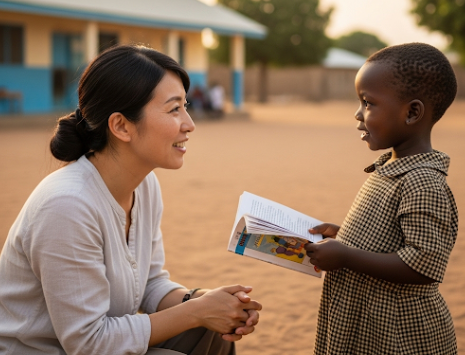
facing village children
尊厳を取り戻す戦い/The Fight to Regain Dignity
アンゴラでは長年にわたる部族間の闘争、そしてテロ活動による破壊が続いていました。各部族は疲弊し、国家の政治はほとんど機能していませんでした。アンゴラ政府は外国からの経済的、技術的支援を呼びかけてきましたが、それに応じるのは一攫千金を狙う強欲な人々ばかりでした。彼らは入れ代わり立ち代わり、資源とその利権を求めて現れました。その目的はただ一つ、アンゴラに眠る石油資源と鉱物資源で一儲けすることだけです。
Angola has suffered for many years from tribal conflicts and devastation caused by terrorist activities. Each tribe was exhausted, and the nation’s politics were barely functioning. The Angolan government has called for economic and technical assistance from abroad, but the only ones who have responded are greedy people seeking to make a quick fortune. They appear one after another, seeking resources and their associated rights. Their sole aim is to make a profit from Angola’s oil and mineral resources.
やって来るのは、ダイヤモンドや石油目的の外国人ばかり。彼らはいつも重機と札束を持って現れ、貧しい村の人々を最低限の賃金で奴隷のようにこき使いました。奴隷に名前は不要。外国人に雇われた監督は、村の人々を番号で呼んで識別していました。
The only ones who come are foreigners seeking diamonds and oil. They always appear with heavy machinery and wads of bills, exploiting the poor villagers like slaves for minimal wages. Slaves don’t need names. The supervisors hired by the foreigners identified the villagers by calling them by numbers.
皮肉なことに、一攫千金を狙ってやって来た外国人たちは、現地の反政府組織やテロ組織の度重なる攻撃に遭い、あるいは敵対勢力との攻防で危険に晒され、ほとんどが逃げ帰るという結果を繰り返していました。
Ironically, the foreigners who came seeking to make a fortune were repeatedly attacked by local anti-government or terrorist organizations, or endangered by battles with opposing forces, resulting in most of them fleeing back home.
希望の光、自衛隊の派遣/A Beacon of Hope, Deployment of Self-Defense Forces
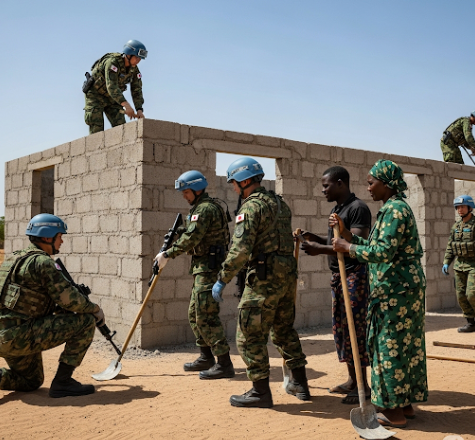
ある日アンゴラの小さな村に、日本から自衛隊がやって来るという知らせが届きました。現地の人々は当初、「どうせ目的は資源やダイヤモンドだろう」と、自衛隊の派遣には冷ややかで、全く期待していませんでした。
One day, news arrived in a small village in Angola that the Japanese Self-Defense Forces would be coming. Initially, the local people were indifferent to the dispatch of the Self-Defense Forces, thinking, “Their purpose is probably resources and diamonds anyway,” and they had no expectations at all.
やがて到着した自衛隊は約50名。村の長老に挨拶をし、村人たちにも簡単な自己紹介をした。そして翌日から調査が始まり、同時進行でいろいろな作業が始まった。自衛隊の作業は静かに、着々と進んでいきました。まず自衛隊員たちは自ら動き、作業の様子を地元の人々に示しました。その後少しずつ、一緒に作業をする人々を募集し、好待遇で迎え入れました。町は徐々に活気を取り戻し、見る間に仮設病院が建てられ、井戸が掘られ、道路が整備されていきました。
About 50 members of the Self-Defense Forces arrived eventually. They greeted the village elder and gave a brief introduction to the villagers. The next day, the investigation began, and various tasks started simultaneously. The Self-Defense Forces’ work progressed quietly and steadily. First, the Self-Defense Force members took the initiative, showing the locals how they worked. Gradually, they recruited people to work with them, welcoming them with generous compensation. The town gradually regained its vitality, and in no time, a temporary hospital was built, wells were dug, and roads were improved.
地元の人々の協力が得られると、作業も効率よく進みました。わずか数週間で仮設の学校も完成し、屋外で授業を受けていた子どもたちは屋根のある校舎へ移動しました。
With the cooperation of the local people, the work progressed efficiently. In just a few weeks, a temporary school was completed, and the children who had been taking classes outdoors moved to a school building with a roof.
豊かな国の基本は教育/Education is the basis of a prosperous country
学校では、読み書きだけでなく、算数や歴史、そして歌や絵を描く時間もありました。子どもたちは、世界にはこんなにもたくさんの色や音、物語があることを知りました。友達と笑い合い、時には意見をぶつけ合う中で、少しずつ子どもらしさを取り戻していきました。以前は無表情だった顔に、笑顔が、そして時には涙が浮かぶようになったのです。
At school, there were lessons not only in reading and writing but also in arithmetic, history, and time for singing and drawing. The children learned that there were so many colors, sounds, and stories in the world. As they laughed together with friends and sometimes clashed opinions, they gradually regained their childlike nature. Smiles, and sometimes tears, began to appear on faces that had previously been expressionless.
百合子は、特に子供たちの教育に力を入れました。彼女は「豊かな国になる基本は教育である」という強い信念を持っていたからです。教育は、子どもたちに知識だけでなく、「考える力」と「夢見る力」を与えました。子供たちは、自分たちの置かれた状況が不当であったとしても、それを乗り越え、そして、自分たちにはもっと良い未来があるはずだと考えるようになりました。
Yuriko dedicated herself especially to the education of her children, because she held a strong belief that “the foundation of a prosperous nation is education.” Education gave the children not only knowledge but also the “power to think” and the “power to dream.” The children began to overcome the unjust circumstances they were in, and to believe that they should have a better future.
子どもたちは朝起きてきれいな水で顔を洗い、昼には勉強ができ、夜には灯の下で宿題ができるようになりました。子どもたちにとって、それだけで最高の幸せであり、十分満足な生活でした。学ぶことで日々自分が成長していることを自覚できるようになり、賢くなることが心身に健康をもたらすことを、人々は知ったのです。周囲の大人たちも、子どもたちの目の奥に光る自信と誇りに、自分たちの未来を感じていました。
The children wake up in the morning and wash their faces with clean water. During the day, they can study, and at night, they can do their homework under the lamp. For the children, that alone is the greatest happiness and a sufficiently satisfying life. They have become aware that they are growing every day through learning, and people have learned that becoming smarter brings health to their mind and body. The adults around them also sensed their own future in the confidence and pride shining in the depths of the children’s eyes.
未来への架け橋/A Bridge to the Future
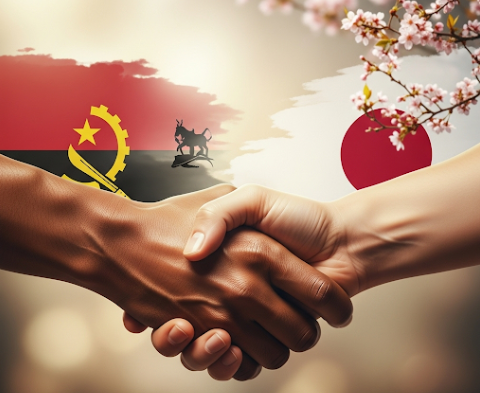
自衛隊と支援組織は、この町から何ひとつ奪いませんでした。重機と札束の代わりに、彼らはスコップと教科書をもってこの町に現れました。それから十年の月日が流れ、この町に未来の光を残して、彼らは静かに去っていきました。
The Self-Defense Forces and supporting organizations took nothing from this town. Instead of heavy machinery and wads of cash, they appeared with shovels and textbooks. After ten years, they quietly left, leaving behind a light for the future of this town.
今、この町は、周辺諸国から「アフリカの発展モデル地区」として注目を集めています。自衛隊と支援組織が残した様々な技術とノウハウは、この街の若者たちに受け継がれました。そして今、彼らは技術指導者、あるいは教師として周辺国を支援する立場となっています。
This town is now attracting attention from surrounding countries as a “model development area in Africa.” The various technologies and know-how left by the Self-Defense Forces and support organizations have been passed down to the young people of this town. And now, they are in a position to support neighboring countries as technical instructors or teachers.
その後、アンゴラと日本との技術協力、経済協力、そして人的交流はますます盛んになりました。2023年3月には、ジェトロが在日アンゴラ大使館との共催で、アンゴラのジョアン・ロウレンソ大統領をはじめとする政府高官らを招き、「日本・アンゴラ・ビジネスフォーラム」が開催され、対アンゴラ投資を強力に-促すことが決定しました。
After that, technical cooperation, economic cooperation, and people-to-people exchanges between Angola and Japan became even more active. In March 2023, JETRO, co-hosting with the Angolan Embassy in Japan, invited Angolan President João Lourenço and other high-ranking government officials to hold the “Japan-Angola Business Forum,” where it was decided to strongly promote investment in Angola.