子供の貧困問題/Child Poverty
日本において、「子供の貧困率」は深刻な問題です。実際に日本のいたるところで、日々子供たちの悲惨な物語が起こっています。日本の政治家たちは一体なにをしているのでしょうか? 日本の政治家には武士の魂はひとかけらも残っていないよう思えます。日本では参議院選挙が終わったばかりこの時期。物語は日本の政治家に訴えかけるために書かれたものです。ある児童保護センターの方のお話をもとに創作された、悲しい物語をひとつ紹介します。
The issue of child poverty in Japan is a serious problem. Indeed, tragic stories involving children unfold daily across the country. What exactly are Japan’s politicians doing? It seems as though not a shred of the samurai spirit remains in Japanese politicians. This story has been written to appeal to Japanese politicians, especially as the House of Councillors election has just concluded in Japan. Here is a sad story, created based on an account from a child welfare center.
幼い路上生活者たち/Young street people
大都会の裏路地、ひしめくネオンの光が届かない場所に、彼女はいた。名前はナナ。12歳で、両親に見捨てられ、このコンクリートのジャングルで一人、息を潜めて生きていた。彼女の住処は、段ボールと古毛布で作られた、小さな秘密の空間。飢えは日常で、冬の凍えるような寒さは、幼い体には耐えがたかった。日本という豊かな国の陰で、「子供の貧困」は確かに存在し、ナナはその最前線にいた。
In the back alleys of the great metropolis, where the clamor of neon lights couldn’t reach, she existed. Her name was Nana. Twelve years old, abandoned by her parents, she lived alone, holding her breath in this concrete jungle. Her dwelling was a small, secret space made of cardboard and old blankets. Hunger was her daily companion, and the freezing cold of winter was unbearable for her young body. In the shadow of a prosperous nation like Japan, child poverty undeniably exists, and Nana was on its front lines.
ナナには両親の間にどんな事情があったのか、知る由もなかった。自分を捨てた母親だが、恨もうとしても、恨みきれなかった。幼い頃の母親の愛は、ナナのかすかな記憶として、決して消えることはなかったからだ。時折、夢の中に現れる優しい声や、あたたかい手の感触が、彼女の心を締め付けた。今のナナを支えているのはこの記憶だけだった。
Nana had no way of knowing what circumstances had arisen between her parents. Though her mother had abandoned her, Nana couldn’t bring herself to fully resent her. The memory of her mother’s love from her early childhood remained a faint, unerasable trace. Occasionally, a gentle voice or the warm touch of a hand would appear in her dreams, clutching at her heart. These memories were all that sustained Nana now.
ある寒い夜、ナナはゴミ箱を漁っていた。食べ残しのパンを見つけ、汚れた手で必死にそれを口に運んだ。その時、どこからか聞こえてきたのは、幼い子供の泣き声。路地の奥から聞こえるその声に、ナナは凍りついた。「虐待・・・」。その言葉が頭をよぎった。震える足で声のする方へ近づくと、そこには泣き続ける小さな男の子がいた。頬には暴力を受けた痕、その目は恐怖に怯えていた。
One cold night, Nana was scavenging through garbage bins. She found a leftover piece of bread and desperately brought it to her mouth with dirty hands. Just then, she heard the cry of a young child from somewhere. The sound coming from deep within the alley made Nana freeze. “Abuse…” The word flashed through her mind. With trembling legs, she moved closer to the source of the crying, and there she found a small boy, still weeping. Marks of violence scarred his cheek, and his eyes were filled with terror.
ナナは迷った。自分もまた、助けを必要としている身だ。でも、あの子を放っておくことはできない。走り去った車より、男の子が心配であった。彼女は持っていた唯一の宝物、拾ったばかりの温かさが残る缶コーヒーを、そっと男の子の手の中に握らせた。そして、男の子の小さな手を引いて、薄暗い路地を歩き出した。どこへ行くのか、自分でも分からなかった。ただ、この子を守れるのは自分しかいないと、それだけを思った。
Nana hesitated. She, too, was in desperate need of help. But she couldn’t leave the boy behind. She worried more about him than the car that had sped away. She gently placed her only treasure, a freshly picked-up can of coffee that was still warm, into the boy’s small hand. Then, holding his tiny hand, she began to walk down the dimly lit alley. She didn’t know where they were going. All she knew was that she was the only one who could protect this child.
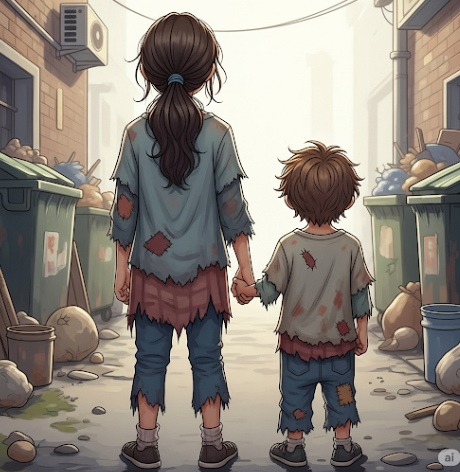
男の子とひと月ほど一緒に過ごしたが、食糧確保に今まで以上に苦労をした。そしてある日ナナは決断をした。ナナは男の子に「ちょっとだけ、ここで動かないで待っていてね」と言い聞かせた。それは交番の裏であった。ナナはお巡りさんに、交番の裏に男の子がいることを告げ、自分は足早にその場から立ち去った。
Nana spent about a month with the boy, but securing food became even more difficult than before. Then one day, Nana made a decision. She told the boy, “Just wait here for a little while, don’t move.” It was behind a police box. Nana informed the police officer that there was a boy behind the police box, and then she quickly left the scene.
ナナは男の子が保護されたことを遠くから見ていた。それが、ナナにとって何よりの安堵であった。誰にも知られず、ただ自分の心に従っただけの行動であった。この小さな行動が、ひとりの男の子の未来を救ったのだ。そう確信したナナは、ひそかに正しいことを行なった自分を誇らしく思った。
Nana watched from a distance as the boy was taken into protection. That was her greatest relief. It was an act known to no one, simply following her own heart. This small action had saved a boy’s future. Convinced of this, Nana felt a quiet pride in having done the right thing.
桜の木の下で/Under the cherry tree
都会の喧騒から逃れるように、ナナはいつも小さな公園の片隅にいた。そこは、都会のビル群に囲まれながらも、桜の木が一本、ひっそりと佇む場所だった。この桜の木は彼女が帰るべき唯一の場所であり、家族のような存在であった。
Seeking refuge from the city’s clamor, Nana was always in a corner of a small park. It was a place, despite being surrounded by urban buildings, where a single cherry blossom tree quietly stood. This cherry blossom tree was the only place she could call home, a presence like family to her.
無機質なコンクリートの街の中。春のひと時、桜の蕾が膨らむのを見守ることがナナの日課になっていた。彼女は桜の「蕾」に自分の命を託し、桜の「花」のはかなく可憐な美しさに、乙女心を重ね合わせていた。
In the midst of the sterile concrete city, watching the cherry blossom buds swell during springtime had become Nana’s daily ritual. She entrusted her own life to the cherry blossom buds, and saw her maidenly heart reflected in the fleeting, delicate beauty of the cherry blossoms.
やがて四月となり、桜は満開になった。しかし、空腹と疲労、そして失望の果て、彼女の身体は病に侵され衰弱していた。ナナは、その桜の木の下で、静かに目を閉じた。降りしきる花びらが、まるで雪のように彼女の体を覆い隠す。遠くから聞こえる都会の喧騒は、もう彼女の耳には届かない。
Eventually, spring arrived, and the cherry blossoms reached full bloom. However, ravaged by hunger, fatigue, and ultimately despair, her body succumbed to illness and weakened. Nana quietly closed her eyes beneath that cherry blossom tree. The falling petals covered her body like snow. The distant clamor of the city no longer reached her ears.
命の最後の瞬間、母の記憶が遠くに見えた。ナナはか細い声で、そっとつぶやいた。
In the final moments of her life, the memory of her mother appeared in the distance. With a faint voice, Nana softly whispered…
「おかあさん……」
”Mom…”
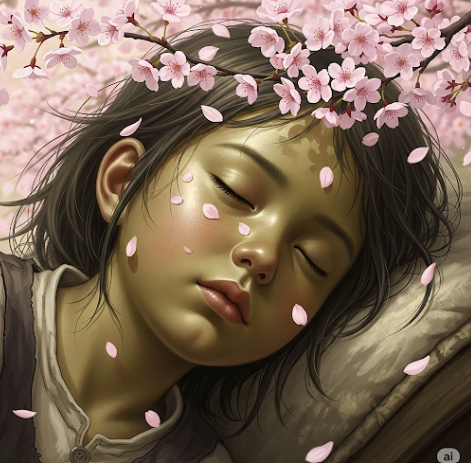
その言葉を最後に、ナナは永遠の眠りについた。彼女の体は、桜の花びらに埋もれ、まるで最初からそこに咲いていたかのように、静かに、そして美しく装われた。ナナの顔に振り落ちる桜の花びら。花びらはナナの顔の美しさを際立たせた。この花びらはナナにとって最初で最後のおめかし・・・それは「死化粧」だった。しかし、その短い人生の中で、彼女は確かに光を灯した。そして、静かに神のもとへと召されていった。召されるナナが仰ぎ見た神の顔、それは愛に満ちた懐かしい母の顔であった。
With those final words, Nana fell into an eternal sleep. Her body, buried beneath the cherry blossoms, was adorned quietly and beautifully, as if she had been blooming there all along. Cherry petals drifted onto Nana’s face, highlighting its beauty. These petals were Nana’s first and last make-up—her death make-up. Yet, in her short life, she undeniably lit a flame. And then, she was quietly called to God. The face of God that Nana looked up to as she was called away was the familiar face of her mother, full of love.